Search This Blog

Showing posts with label Egypt. Show all posts

Saturday, September 23, 2023

The Menendez Indictment

From DOJ 

According to the allegations in the Indictment unsealed today in Manhattan federal court:[1]

ROBERT MENENDEZ is the senior U.S. Senator from New Jersey and currently the Chairman of the Senate Foreign Relations Committee (“SFRC”). NADINE MENENDEZ began dating MENENDEZ in February 2018, they became engaged in October 2019, and they married in October 2020. Shortly after they began dating in 2018, NADINE MENENDEZ introduced MENENDEZ to her long-time friend WAEL HANA, who is originally from Egypt, lived in New Jersey, and maintained close connections with Egyptian officials. HANA was also business associates with FRED DAIBES, a New Jersey real estate developer and long-time donor to MENENDEZ, and JOSE URIBE, who worked in the New Jersey insurance and trucking business.
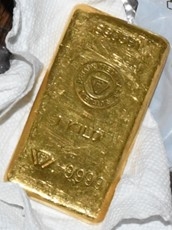
Between 2018 and 2022, MENENDEZ and NADINE MENENDEZ agreed to and did accept hundreds of thousands of dollars’ worth of bribes from HANA, DAIBES, and URIBE. These bribes included gold, cash, a luxury convertible, payments toward NADINE MENENDEZ’s home mortgage, compensation for a low-or-no-show job for NADINE MENENDEZ, home furnishings, and other things of value. In June 2022, the FBI executed a search warrant at the New Jersey home of MENENDEZ and NADINE MENENDEZ. During that search, the FBI found many of the fruits of this bribery scheme, including cash, gold, the luxury convertible, and home furnishings. Over $480,000 in cash — much of it stuffed into envelopes and hidden in clothing, closets, and a safe — was discovered in the home, as well as over $70,000 in cash in NADINE MENENDEZ’s safe deposit box, which was also searched pursuant to a separate search warrant. Some of the envelopes contained the fingerprints and/or DNA of DAIBES or his driver. Other of the envelopes were found inside jackets bearing MENENDEZ’s name and hanging in his closet, as depicted below.

...

 As part of the scheme, MENENDEZ provided sensitive, non-public U.S. government information to Egyptian officials and otherwise took steps to secretly aid the Government of Egypt. For example, in or about May 2018, MENENDEZ provided Egyptian officials with non-public information regarding the number and nationality of persons serving at the U.S. Embassy in Cairo, Egypt. Although this information was not classified, it was deemed highly sensitive because it could pose significant operational security concerns if disclosed to a foreign government or made public. Without telling his professional staff or the State Department that he was doing so, on or about May 7, 2018, MENENDEZ texted that sensitive, non-public embassy information to his then-girlfriend NADINE MENENDEZ, who forwarded the message to HANA, who forwarded it to an Egyptian government official. Later that same month, MENENDEZ ghost-wrote a letter on behalf of Egypt to other U.S. Senators advocating for them to release a hold on $300 million in aid to Egypt. MENENDEZ sent this ghost-written letter to NADINE MENENDEZ, who forwarded it to HANA, who sent it to Egyptian officials.


At various times between 2018 and 2022, MENENDEZ also conveyed to Egyptian officials, through NADINE MENENDEZ, HANA, and/or DAIBES, that he would approve or remove holds on foreign military financing and sales of military equipment to Egypt in connection with his leadership role on the SFRC. For example, in or about July 2018, following meetings between MENENDEZ and Egyptian officials, which were arranged and attended by NADINE MENENDEZ and HANA, MENENDEZ texted NADINE MENENDEZ that she should tell HANA that MENENDEZ was going to sign off on a multimillion-dollar weapons sale to Egypt. NADINE MENENDEZ forwarded this text to HANA, who forwarded it to two Egyptian officials, one of whom replied with a “thumbs up” emoji. MENENDEZ made similar communications over the ensuing years. For example, in January 2022, MENENDEZ sent NADINE MENENDEZ a link to a news article reporting on two pending foreign military sales to Egypt totaling approximately $2.5 billion. NADINE MENENDEZ forwarded this link to HANA, writing, “Bob had to sign off on this.”
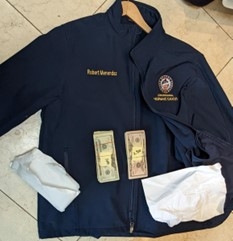
Picture of jacket bearing Menendez’s name with money on top of it
Picture of gold bar
Picture of gold bar

I


Monday, October 29, 2018

The Protocols of the Elders of Zion


The Pittsburgh synagogue massacre reminds us of the need to watch out for anti-Semitism.  In 2003, Representative Tom Lantos (D-CA) -- a survivor of the Holocaust -- entered important material into the Congressional Record:  The infamous "Protocols of the Elders of Zion" was an early example of what later generations would call disinformation or "fake news."

INFAMOUS ANNIVERSARY: A CENTURY OF THE ANTI-SEMITIC PROTOCOLS''
______

HON. TOM LANTOS of California in the House of Representatives
Tuesday, September 30, 2003


Mr. LANTOS. Mr. Speaker, 100 years ago one of the most infamous and most outrageous forgeries in all of history first appeared--``The Protocols of the Elders of  ion.'' The outrage is not simply because this document was plagiarized or because it was absolutely and patently false. It is because this forgery was an important element in generating the vicious and mindless anti-Semitism that led to the Holocaust.
Mr. Speaker, we in this House recently condemned and criticized the rising flood of anti-Semitism that has stained Europe in the last decade when we adopted House Concurrent  Resolution 49. It is shocking and sickening that just 5 decades after 6 million innocent children, women and men were brutally murdered by the Nazi thugs, we are seeing a
sharp escalation in anti-Semitic rhetoric and anti-Semitic violence. We have witnessed vicious racist propaganda and physical assaults, the burning of synagogues and the desecration of cemeteries.
This outburst of anti-Semitic violence has its roots in anti-Semitic propaganda, and unfortunately the lies of the ``Protocols'' still continue to play a pernicious role in inciting vicious acts. The fact that this felonious and fallacious document is still cited and distributed even by governments which ought to know better is evidence of its evil influence and the ease with which hate, bigotry and racism are spread.
Although scholars, historians, and anyone who would take the time to look seriously at the ``Protocols'' knows that the document is patently false, but there are still willing purveyors of this destructive drivel. It truly boggles the mind that Arab Radio and Television of Saudi Arabia just 2 years ago produced a 30-part series entitled "Horseman Without a Horse'' which portrays the ``Protocols'' as historical fact and the basis of Israeli government policies.
Furthermore, that entire 30-part series was broadcast by a number of television stations in Egypt. 
Unfortunately, Mr. Speaker, a full century after the first appearance of the fraudulent ``Protocols,'' the forgery is alive and well. Recently, to mark this infamous anniversary, Forward (August 22, 2003) published an excellent article by my friend William Korey entitled ``Century of Hatred: `Protocols' Live to Poison Yet Another Generation.''
Bill Korey brings his extraordinary scholarly perspective to this issue, and he is uniquely qualified for the task as the former Director of International Policy and Research at B'nai B'rith. The forgery of the ``Protocols'' was perpetrated by the Czarist secret police, and Bill has an international reputation as a scholar of anti-Semitism in Russia. He is the  author of The Soviet Cage: Antisemitism in Russia (Viking, 1973) and Russian Anti-Semitism, Pamyat and the Demonology of Zionism (Hebrew University/Harwood Academic Publishers, 1995). Mr. Speaker, I ask that Bill Korey's excellent article from Forward be placed in the Record, and I urge my colleagues to give it careful and thoughtful attention.

[From Forward, Aug. 22, 2003]
Century of Hatred: ``Protocols'' Live To Poison Yet Another Generation (By William Korey)

History's most virulent antisemitic propaganda essay, ``The Protocols of the Elders of Zion,'' was first published 100 years ago this week. Though the Protocols turned out to be both a notorious plagiarism and a shocking forgery, the essay would exercise a powerful impact upon the modern era, principally as a critical factor in generating the Holocaust. Despite its gross falsehood and the horrors it sparked, the Protocols strikingly continues to be promoted today, most alarmingly in such important institutional settings as the United Nations and Middle Eastern governmental media.
The first publication to print the Protocols was the St. Petersburg newspaper Znamya--Russian for Banner--from August 26 to September 7, 1903. Pavel Krushevan, editor of the paper, was known for his ultra-rightist antisemitic views and found common cause with the so-called Black Hundreds, a group active on behalf of extremist causes.
Krushevan, however, was not the author of the Protocols. It was drafted under the prodding and guidance of Piotr Rachkovsky, director of the Paris branch of Okhrana, the Russian secret police. Sinister and wily, he cultivated the art of forging letters or  documents in which Jews were targeted as revolutionaries and anarchists striving for democracy in czarist Russia. As early as 1891, he revealed his intentions in a private  letter.
The published Protocols were said to be the secret decisions reached at a gathering of Jewish leaders. That gathering was initially held to be the First Zionist Congress, which met in 1897 in Basel, Switzerland. Later, the source was attributed to B'nai B'rith.
What was stunning about the Protocols, as later scholarly investigation and research revealed, was that it was lifted almost entirely from a forgotten political satire published in Paris in 1864 and written by a well-known democrat, Maurice Joly.
Joly's pamphlet was designed to expose the repressive character of Emperor Napoleon III's regime, which ruled France at the time. Titled ``A Dialogue in Hell: Conversations Between Machiavelli and Montesquieu About Power and Rights,'' the pamphlet made no reference to the Jews.
The creator of the Protocols simply plagiarized the Joly work. Protocols 1 through 19 strikingly correspond with Joly's first 17 dialogues. In nine cases, the borrowing amounts to more than half of the Joly text; in some cases, they constitute three-quarters of the test, and in one case, Protocol 7, almost the entire text is plagiarized. Moreover, the very order of the plagiarized passages remained the same as in the Joly work. The main change in  the shamelessly forged Protocols, of course, was the insertion of antisemitic content and language into the Joly dialogues.
Nor was the creator of the Protocols original in the inserted antisemitic language. The forgery rests on the traditional trope of international Jewry, or alternatively Zionism, aspiring to world domination based on the biblical concept of the ``Chosen People''. This aspiration, the Protocols purported, is to be achieved through guile, cunning and conspiratorial devices, particularly through Jewish control of the international banking system and press.
The Protocols also played on the fear of Freemasons among court circles, aristocracy and the church establishment. The international fraternal order of Masons, which was identified with liberalism and modernity, was presented in the Protocols as having already been infiltrated and manipulated by the Elders of Zion.
In its manipulative conspiracy, the Elders were to focus on both internal, domestic matters and interstate relations. Within each state, they were to foster discontent and unrest, especially among workers. By promoting liberal ideas, they were to produce confusion while, at the same time, seizing behind-the-scenes control of political parties. Drunkenness and prostitution were said to be vigorously encouraged and morality undermined.
Interstate conflicts were to be stirred up through emphasis upon national differences. Every effort was to be made by the Elders of Zion to increase armament production and enhance the likelihood of warfare. The end game of the Zionists, according to the  Protocols, was not victory for one side but rather even greater chaos.
The Elders of Zion's ultimate goal, perceived to be but a century away, was the messianic age when the entire world would be united under Judaism and dominated by a descendant of the House of David. The emergent structure of a Kingdom of Zion resembles the nightmare vision of George Orwell's ``1984.''
The only nightmare vision to result from the Protocols, of course, was the near destruction of European Jewry during the Holocaust. Both Adolf Hitler and Heinrich Himmler were deeply impressed the Protocols and made it required reading for the Hitler Youth.
With the destruction of Nazism and the horrors that antisemitism had wrought, one might have expected that the Protocols would be thrown in the trash bin of history. The forgery, though, found a welcome readership in Leonid Brezhnev's Soviet Union. The  extraordinary Soviet campaign against Zionism reached a crescendo in 1977, with the Soviet Academy of Science's release of the vehemently hateful publication ``International Zionism: History and Politics.''
Ironically, the Communists formally turned to Arab sources for their anti-Zionist propaganda. One major center of hate literature was based in Cairo, where Johannes von Leers, a former employee of Joseph Goebbels's Nazi propaganda ministry, was spreading antisemitism under his adopted Arabic name, Omar Amin.
The Protocols may have been nourished in Europe with its ancient traditions of Jew-baiting, but it found new life in Egypt and elsewhere in the Arab world. Egyptian President Gamal Abdel Nasser endorsed the document in 1958. During the 1960s and 1970s at least nine different Arabic translations were published, some by the Egyptian government press. In June 2001, the Egyptian paper of record, Al Ahram, cited one of the Protocols as specifying how Jews plan to ``control the world'' by a combination of means, including the use of Freemasons.
A major milestone for the new drive to exploit the old forgery came at the 2001 United Nations World Conference Against Racism held in Durban, South Africa. A table at the Durban forum for nongovernmental organizations displayed the Protocols. The tract and similar racist publications so shocked Congressman Tom Lantos of California, a key figure in the American delegation and the only Holocaust survivor in Congress, that he described it as ``the most sickening display of hate for Jews I have seen since the Nazi period.''
A century after its first publication, ``The Protocols of the Elders of Zion'' continues to nourish a vibrant message of hate. One would have thought that with all that humanity has learned during the past 100 years, the Protocols' appeal to ignorance would have waned, if not disappeared entirely. The sad truth is that as long as the forgery remains a best seller, the ground remains fertile for antisemitism.

Tuesday, July 15, 2014

International Views of the United States

Pew reports that Israelis like the United States, but that people elsewhere in the Middle East tend in the other direction.
A decade ago anti-Americanism was on the rise around the world, in large part thanks to public opposition to the U.S. invasion of Iraq. Today, despite recent revelations of U.S. National Security Agency spying on foreign leaders and global opposition to U.S. drone strikes, there is little evidence of profound anti-Americanism except in a handful of countries, according to a new Pew Research Center survey of 44 nations. Foreigners’ love affair with the United States remains strong in Africa and most of Asia, Europe and Latin America. But who likes Uncle Sam, who doesn’t and whose affections are evolving paints a pretty accurate road map of the overseas challenges facing Washington in the years ahead.

 10 Biggest Critics and Fans of the U.S.

Saturday, August 17, 2013

The Limits of the Presidency

Peter Wehner writes at Commentary:
[E]ven if Barack Obama had done everything right, things in Egypt might be roughly where they are today. It may be the case that the capacity of the United States to influence events in Egypt was intrinsically limited. The popular movement to overthrow Hosni Mubarak, after all, was organic; it was not driven by American policy. There’s nothing we could have done to save Mubarak’s rule. And in fact the Obama administration itself stuck with Mubarak until very nearly the end of his rule.
...
That doesn’t mean that President Obama, or for that matter any other president, shouldn’t be criticized for his policies and his failures. Nor does it mean Mr. Obama shouldn’t be held accountable for the promises he made before and shortly after he took office, when he seemed to be under the impression that he could shape world events like hot wax. But I for one can’t help having some sympathy for those in the Obama administration who right now are being forced to make decisions about rapidly unfolding events, based on incomplete knowledge, with an imperfect ability to predict the consequences of each course of action. I recall during my years in government being struck by the fact that making the right decision seemed a good deal more obvious when I was on the outside looking in rather than on the inside looking out.

In an interview in 1962, President Kennedy was asked whether his experience in office matched his expectation and whether things had worked out as he saw in advance. President Kennedy responded this way:
So that I would say that the problems are more difficult than I had imagined them to be. The responsibilities placed on the United States are greater than I imagined them to be, and there are greater limitations upon our ability to bring about a favorable result than I had imagined them to be. And I think that is probably true of anyone who becomes President, because there is such a difference between those who advise or speak or legislate, and between the man who must select from the various alternatives proposed and say that this shall be the policy of the United States. It is much easier to make the speeches than it is to finally make the judgments, because unfortunately your advisers are frequently divided. If you take the wrong course, and on occasion I have, the President bears the burden of the responsibility quite rightly. The advisers may move on to new advice.
So will the commentators.

Friday, July 19, 2013

Foreign Policy ... Meh

In recent years, the percentages of Americans wanting the U.S. to mind its own business internationally has ranged from 42% to 49% — compared to an average of 36% over the 50-year study period.
That represents one of the highest measures of isolationist sentiment in this question series matched only briefly during the post-Vietnam era in the 1970s and in 1994, following the dissolution of the Soviet Union.
Recent surveys show many other indicators of American disengagement both in general and in response to today’s foreign policy problems.
In the final month of the 2012 presidential campaign, no more than 6% of those surveyed cited a foreign policy issue, including the wars in Iraq and Afghanistan, as the most important problem facing the country today. That compares to July, 2008 when 25% cited a foreign policy concern, including 17% who singled out the war in Iraq, even at a time when the country faced a deepening economic crisis. In January 2004, 37% cited a foreign policy concern.
Similarly, when the public was asked in January what President Obama should focus on, 83% said domestic policy and 6% said foreign policy. That was the lowest registration of foreign policy concerns in the 15 years of Pew Research’s January survey on national priorities.
Public interest in news from Egypt has plummeted since the early weeks of the Arab Spring in February 2011. And the share of Americans saying what happens in Egypt is “very important” to U.S. interests has fallen by 10 points – from 46% to 36% – since then.
The survey by the Pew Research Center, conducted July 11-14 among 1,002 adults, finds that about a quarter (23%) say the United States can have a lot of influence on the current situation, while nearly as many (24%) say it has little or no influence; 48% say the U.S. can have some influence on events in Egypt.
...
Fully 78% say that while the news from Egypt is important, “there are issues in the United States that concern me more.” And a majority (55%) says they feel they lack the background information to really know what is going on there. These opinions are little changed from two years ago, when public interest in Egypt news was substantially higher.

Saturday, July 6, 2013

Pictures and Crises

CBS reports that Secretary of State John Kerry -- contrary to earlier denials -- has been boating during the  Egypt crisis:


On Twitter, the president seemed to be making fun of the controversy with a 2010 photo of himself:


The president and Kerry are both making serious PR mistakes.  If the Egypt crisis turns into civil war -- and particularly if Americans come into harm's way -- these images will make them look foolish and detached, much  this photo did to President Bush during  Hurricane Katrina:


Wednesday, July 3, 2013

President Obama on Coups

" I just want to make absolutely clear that I am absolutely opposed and condemn any efforts at violent overthrows of democratically elected governments, wherever it happens in the hemisphere. That is not the policy of our Government. That is not how the American people expect their Government to conduct themselves. And so I want to be as clear as possible on that." -- April 19, 2009

"I think it's -- it would be a terrible precedent if we start moving backwards into the era in which we are seeing military coups as a means of political transition rather than democratic elections."  -- June 29, 2009

"Now, make no mistake: History is on the side of these brave Africans, not with those who use coups or change constitutions to stay in power. Africa doesn't need strongmen; it needs strong institutions." -- July 11, 2009

Saturday, March 16, 2013

Americans on Israel and Egypt

Our chapter on national security and foreign policy discusses the role of public opinion.  When it comes to the Middle East, Americans have definite preferences.

Gallup reports on opinion toward Israel:
President Barack Obama prepares to visit Israel, the Palestinian West Bank, and Jordan next week -- his first trip to the region as president -- Americans' sympathies lean heavily toward the Israelis over the Palestinians, 64% vs. 12%. Americans' partiality for Israel has consistently exceeded 60% since 2010; however, today's 64% ties the highest Gallup has recorded in a quarter century, last seen in 1991 during the Gulf War. At that time, slightly fewer than today, 7%, sympathized more with the Palestinians.
...
Consistent with prior years, Republicans are substantially more likely than Democrats to favor the Israelis, 78% vs. 55%, with the preferences of independents -- currently 63% -- more closely matching those of Democrats.
Gallup reports on opinion toward Egypt:
The slight majority of Americans, 53%, now hold an unfavorable view of Egypt and 40% a favorable view. That is the most negative tilt in Americans' views of Egypt since Gallup began measuring favorability toward the country in this format in 1991.

Friday, September 14, 2012

Social Media and the Mideast Crisis

Social media have played a central part in the unfolding crisis in the Mideast.  Politico reports:
The Internet tools of the Arab Spring have become the weapons of a new Arabian nightmare playing out at American diplomatic missions across North Africa and the Middle East.
Platforms like Twitter, Facebook and YouTube that spread an obscure movie trailer depicting the Muslim prophet Muhammad in offensive ways are facing a clamp-down from governments and even Internet companies in some cases.
Google-owned YouTube has blocked access to the video from inside Libya and Egypt. President Hamid Karzai has set up a firewall to prevent Afghans from viewing YouTube videos at all. And the U.S. Embassy in Cairo deleted its own tweets about the video after they became part of the political debate in the American presidential election.
The Atlantic reports:
American diplomat Larry Schwartz has gotten himself into some trouble this week. A senior public affairs officer at the U.S. embassy in Cairo, Schwartz on Tuesday wrote a much-discussed memo stating that the embassy "condemns the continuing efforts by misguided individuals to hurt the religious feelings of Muslims," as well as several defensive tweets, some of which he later deleted. For example: "This morning's condemnation (issued before protests began) still stands. As does condemnation of unjustified breach of the Embassy." Romney condemned the "apology," as he described it, and the White House quickly disavowed the memo.

State Department officials back in Washington, it turns out, had reviewed the memo and explicitly told Schwartz not to publish it, which he did anyway. "Frankly, people here did not understand it," a State Department official told Foreign Policy's Josh Rogin. "The statement was just tone deaf. It didn't provide adequate balance. We thought the references to the 9/11 attacks were inappropriate, and we strongly advised against the kind of language that talked about 'continuing efforts by misguided individuals to hurt the religious feelings of Muslims.'"

Tuesday's controversial tweets from the @USEmbassyCairo account, which Schwartz reportedly runs, were unusually provocative and political but otherwise generally consistent with the feed's noticeably conversational tone. American embassies across the globe have taken to Twitter over the last year or two, an impressive soft power outreach to citizens of foreign countries, but the Cairo feed has stood out. Other feeds, even when they tweet frequently, tend to take the staid tone of official diplomacy, tweeting press releases, quotes from U.S. officials, and relevant headlines. 
The Washington Post reports:
The White House asked YouTube on Tuesday to review an anti-Muslim film posted to the site that has been blamed for igniting the violent protests this week in the Middle East.
Tommy Vietor, spokesman for the National Security Council, said the White House has “reached out to YouTube to call the video to their attention and ask them to review whether it violates their terms of use.”

However, the video remained on the site as of Friday afternoon, and it is posted many other places on the Internet.
Messages to YouTube, and Google, which owns the site, were not immediately returned Friday. On Wednesday, a YouTube spokesperson said the video “is clearly within our guidelines and so will stay on YouTube.”

Wednesday, April 11, 2012

The Arab Spring and Democracy


In Chapter One of the next edition of our textbook we will discuss the “Arab Spring”: the political protests and revolutionary efforts in North Africa and the Middle East that began in December of 2010. In the Wall Street Journal, Matthew Kaminski assesses the prospects that freedom and democracy will take root in this part of the world in the coming years:
In one country after another, mass religious-inspired political movements have outmaneuvered weak liberal parties. Fledgling democracies have been snuffed out. Anti-Semitism and sectarian violence have ensued.

"It may be that the system of parliamentary Government which suits Britain suits few other countries besides," writes the Times of London. "Recent Egyptian governments have tried to conform to the parliamentary type of republican democracy, but with scant success."

The Middle East after the triumph of Islamists in every election of the past half year? Not quite.

The Times editorial ran on Aug. 10, 1936 and was about Spain, not Egypt. In 1930s Spain—as in Austria, Hungary, Portugal, Poland, Slovakia and Croatia in that fateful interwar period—political Catholicism sank fledgling liberal systems after gaining power through coup or ballot box. (The Nazis used race, not religion.)

Parallels to today's Middle East are bracing. Parties and state institutions in Egypt, Tunisia and Libya are weak. As in the 1930s, economies are struggling. Arab liberals are no electoral match for the Muslim Brotherhood and other offshoots of political Islam.

Yet the assumption of inevitable democratic failure requires a leap of belief in cultural determinism about Arabs no different or less patronizing than the Times of London once made about continental Europeans.

The experiment has only begun in the Middle East. . . .


Friday, February 11, 2011

Egypt and the American Public

According to the Pew Research Center for the People and the Press, only 48 percent of Americans say that they have read or heard "a lot" about anti-government protests in Egypt. Despite heavy media coverage over the past several weeks, 38 percent say that they have heard only "a little," and 13 percent say "nothing at all."

Despite the intense media focus on Egypt, Americans appear to be fairly mild in their calculations of its importance. There is minimal evidence that the average American considers the Egypt situation to be a major international crisis as far as its impact on the United States is concerned.

Egypt barely registers when Americans are asked to name the most important problem facing the country today. Domestic economic issues and in particular jobs overwhelm every other concern. The Feb 2-5 Gallup survey finds .5% (5 people out of 1015) mentioning Egypt as the most important problem.

Less than half of Americans say what happens in Egypt is vitally important to the U.S. Egypt ranks 9th on a list of 12 countries rated on this dimension. China dwarfs all other countries as vitally important, no doubt reflecting its economic prowess in today's international marketplace. Other countries seen as at least marginally more important than Egypt to U.S. interests include North Korea, Iran, Israel, Iraq, Afghanistan, Mexico, and Pakistan.
The Pew Research Center also provides background data on American priorities for foreign policy:
In the most recent "America's Place in the World" survey, conducted in November 2009, just 21% said promoting democracy abroad should be a top long-range priority for U.S. foreign policy. Democracy promotion ranked last on a list of 11 long-term foreign policy objectives. The most widely shared goals -- protecting the nation against terrorist attacks and protecting the jobs of American workers -- were cited by 85% each.