Search This Blog

Showing posts with label 9/11. Show all posts

Saturday, September 11, 2021

United 93 in 2021


Remarks by President George W. Bush at the Flight 93 National Memorial in Shanksville, Pennsylvania
Transcript of remarks from September 11, 2021 commemorating the 20th anniversary of 9/11.
September 11, 2021

Thank you very much. Laura and I are honored to be with you. Madam Vice President, Vice President Cheney. Governor Wolf, Secretary Haaland, and distinguished guests:

Twenty years ago, we all found – in different ways, in different places, but all at the same moment – that our lives would be changed forever. The world was loud with carnage and sirens, and then quiet with missing voices that would never be heard again. These lives remain precious to our country, and infinitely precious to many of you. Today we remember your loss, we share your sorrow, and we honor the men and women you have loved so long and so well.

For those too young to recall that clear September day, it is hard to describe the mix of feelings we experienced. There was horror at the scale of destruction, and awe at the bravery and kindness that rose to meet it. There was shock at the audacity of evil, and gratitude for the heroism and decency that opposed it. In the sacrifice of the first responders, in the mutual aid of strangers, in the solidarity of grief and grace, the actions of an enemy revealed the spirit of a people. And we were proud of our wounded nation.

In these memories, the passengers and crew of Flight 93 must always have an honored place. Here the intended targets became the instruments of rescue. And many who are now alive owe a vast, unconscious debt to the defiance displayed in the skies above this field.

It would be a mistake to idealize the experience of those terrible events. All that many people could initially see was the brute randomness of death. All that many could feel was unearned suffering. All that many could hear was God’s terrible silence. There are many who still struggle with a lonely pain that cuts deep within.

In those fateful hours, we learned other lessons as well. We saw that Americans were vulnerable, but not fragile – that they possess a core of strength that survives the worst that life can bring. We learned that bravery is more common than we imagined, emerging with sudden splendor in the face of death. We vividly felt how every hour with our loved ones is a temporary and holy gift. And we found that even the longest days end.

Many of us have tried to make spiritual sense of these events. There is no simple explanation for the mix of Providence and human will that sets the direction of our lives. But comfort can come from a different sort of knowledge. After wandering long and lost in the dark, many have found they were actually walking, step by step, toward grace.

As a nation, our adjustments have been profound. Many Americans struggled to understand why an enemy would hate us with such zeal. The security measures incorporated into our lives are both sources of comfort and reminders of our vulnerability. And we have seen growing evidence that the dangers to our country can come not only across borders, but from violence that gathers within. There is little cultural overlap between violent extremists abroad and violent extremists at home. But in their disdain for pluralism, in their disregard for human life, in their determination to defile national symbols, they are children of the same foul spirit. And it is our continuing duty to confront them.

After 9/11, millions of brave Americans stepped forward and volunteered to serve in the Armed Forces. The military measures taken over the last 20 years to pursue dangers at their source have led to debate. But one thing is certain: We owe an assurance to all who have fought our nation’s most recent battles. Let me speak directly to veterans and people in uniform: The cause you pursued at the call of duty is the noblest America has to offer. You have shielded your fellow citizens from danger. You have defended the beliefs of your country and advanced the rights of the downtrodden. You have been the face of hope and mercy in dark places. You have been a force for good in the world. Nothing that has followed – nothing – can tarnish your honor or diminish your accomplishments. To you, and to the honored dead, our country is forever grateful. (Applause.)

In the weeks and months following the 9/11 attacks, I was proud to lead an amazing, resilient, united people. When it comes to the unity of America, those days seems distant from our own. A malign force seems at work in our common life that turns every disagreement into an argument, and every argument into a clash of cultures. So much of our politics has become a naked appeal to anger, fear, and resentment. That leaves us worried about our nation and our future together.

I come without explanations or solutions. I can only tell you what I have seen.

On America’s day of trial and grief, I saw millions of people instinctively grab for a neighbor’s hand and rally to the cause of one another. That is the America I know. (Applause.)

At a time when religious bigotry might have flowed freely, I saw Americans reject prejudice and embrace people of Muslim faith. That is the nation I know. (Applause.)

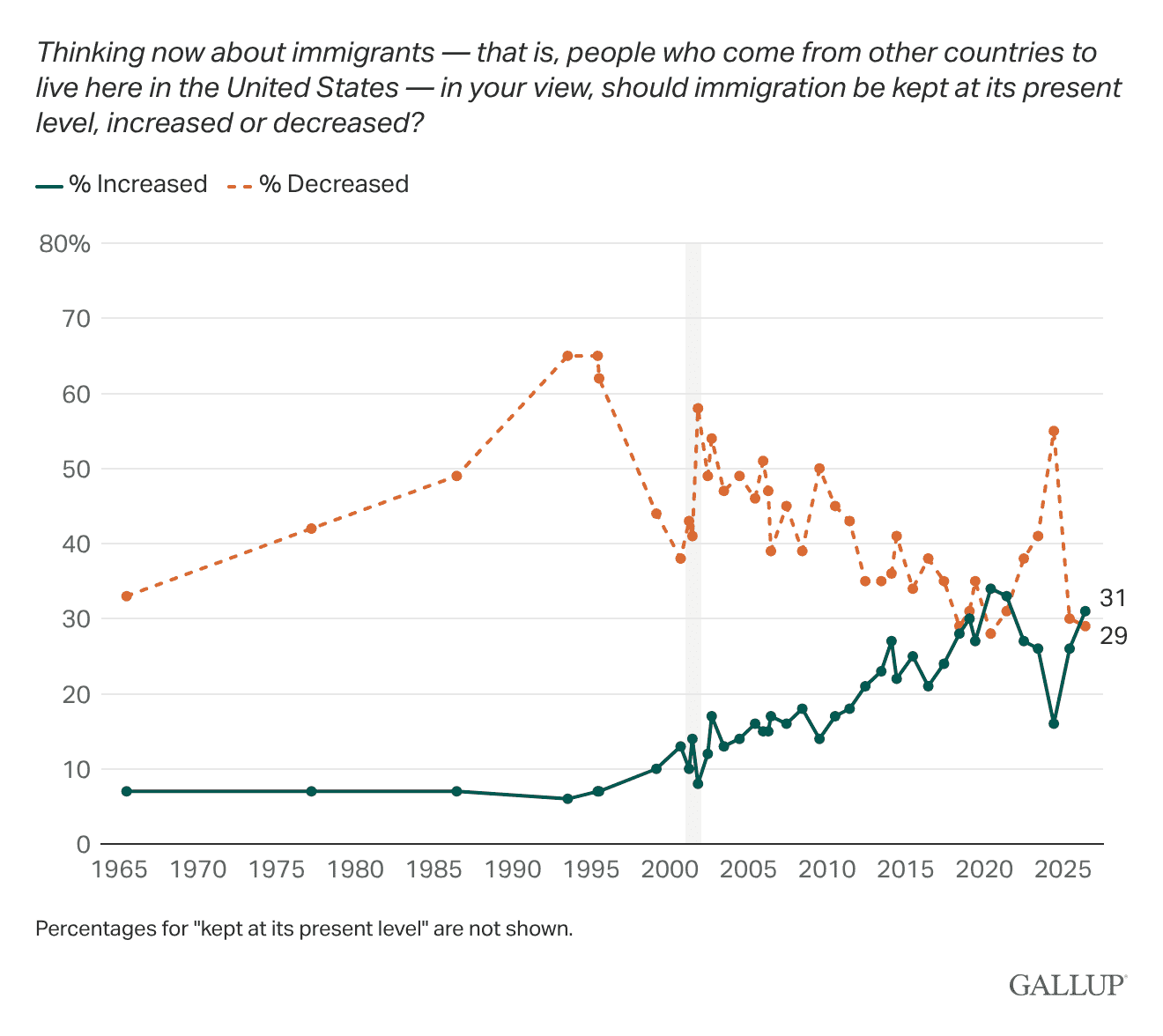
At a time when nativism could have stirred hatred and violence against people perceived as outsiders, I saw Americans reaffirm their welcome of immigrants and refugees. That is the nation I know. (Applause.)

At a time when some viewed the rising generation as individualistic and decadent, I saw young people embrace an ethic of service and rise to selfless action. That is the nation I know. (Applause.)

This is not mere nostalgia; it is the truest version of ourselves. It is what we have been – and what we can be again.

Twenty years ago, terrorists chose a random group of Americans, on a routine flight, to be collateral damage in a spectacular act of terror. The 33 passengers and 7 crew of Flight 93 could have been any group of citizens selected by fate. In that sense, they stood in for us all.

The terrorists soon discovered that a random group of Americans is an exceptional group of people. Facing an impossible circumstance, they comforted their loved ones by phone, braced each other for action, and defeated the designs of evil.

These Americans were brave, strong, and united in ways that shocked the terrorists – but should not surprise any of us. This is the nation we know. (Applause.) And whenever we need hope and inspiration, we can look to the skies and remember.

God bless.

END

United 93

 A decade ago, former President George W. Bush dedicated the United 93 National Memorial at Shanksville, Pennsylvania:


For 10 years, our troops have risked and given their lives to prevent our enemies from attacking America again. They've kept us safe; they have made us proud; and they have upheld the spirit of service shown by the passengers on Flight 93.

Many years ago in 1863, another President came to dedicate a memorial site in this state. He told his audience that:

In a larger sense we cannot dedicate, we cannot consecrate, we cannot hallow this ground. For the brave souls who struggled there, it consecrated it far above our poor power to add or detract.

He added, "The world will little note, nor long remember what we say here, but it can never forget what they did here."

So it is with Flight 93.

For as long as this memorial stands, we will remember what the men and women aboard the plane did here. We'll pay tribute to the courage they showed, the sacrifice they made, and the lives they spared.


May God bless you all.

Friday, September 11, 2020

Remembering 9/11

Leslie Bonilla at VOA:
In a 2016 study, Howard Schuman and Amy Corning, researchers with the University of Michigan at Ann Arbor’s Institute for Social Research, compared years of survey data on the Vietnam War and 9/11 to predict how generations of Americans might remember the attacks.

Their study supported the “critical years” hypothesis, which suggests that events happening when people are between 10 and 30 years old have the greatest likelihood of defining generations. People older than 30 may consider other, earlier events in their lives as more important to them, while those younger than 10 may be too young to fully understand the significance of an event.

“Earlier events learned about indirectly from school or media … cannot have the same emotional impact regardless of their objective significance,” wrote Schuman and Corning in the study, published in the International Journal of Public Opinion Research.

Some experts think the attacks are what sets the Millennial generation, whose members were born between the early 1980s and mid-1990s, apart from the next one, Generation Z, born beginning in the mid-1990s.

It is 9/11 that is the defining and dividing event," Jack Dorsey, president of the Center for Generational Kinetics, told Business Insider in 2019. "Either you remember it and all the emotion that goes with it or you don't, and if you don't, then you're in Gen Z.”

Many younger Americans have grown up in a post-9/11 world, where developments like stricter airport security measures, Islamophobia or the U.S. war on terror have always been a reality.


Monday, November 12, 2018

Grace, Reconciliation, and a Veteran

On Saturday Night Live last week, Pete Davidson mocked Dan Crenshaw, a GOP congressional candidate who had lost an eye during combat in Afghanistan.  It was an ugly joke.  A week later, though, he apologized to Crenshaw on air, and the segment turned out to be remarkably moving and patriotic.  Crenshaw -- now a representative-elect from Texas -- not only accepted the apology with grace and wit, he mentioned Davidson's father, a New York firefighter who gave his life on 9/11.

It is a perfect clip to watch on Veterans Day.

Friday, December 16, 2016

American Memory: 9/11 Tops the List

 Claudia Deane, Maeve Duggan and Rich Morin report at Pew:
Shared experiences define what it means to be an American. The Sept. 11, 2001, terrorist attacks were such a unifying event for modern Americans. Nothing else has come close to being as important or as memorable, according to a new survey conducted by Pew Research Center in association with A+E Networks’ HISTORY.
Roughly three-quarters (76%) of the public include the Sept. 11 terror attacks as one of the 10 events during their lifetime with the greatest impact on the country, according to a national online survey of 2,025 adults conducted June 16-July 4, 2016.
The perceived historic importance of the attacks on New York and the Pentagon, span virtually every traditional demographic divide. Majorities of men and women, Millennials and Baby Boomers, Americans with college degrees and those without a high school diploma rate 9/11 as one of the 10 most historically significant events to occur during their lifetime. And while they seem to agree on little else this election year, the survey finds that more than seven-in-ten Republicans and Democrats name the attacks as one of their top 10 historic events.
The one exception to this pattern is the views of blacks and whites. While the Sept. 11 attacks easily top the list for whites, it shares the top spot with the election of President Barack Obama among blacks. Similarly, the civil rights movement ranks behind only the election of Obama and 9/11 on the list of most significant events for blacks but is absent from the top 10 lifetime events for whites.

Sunday, September 11, 2016

Trump on 9/11

On September 11, as other Americans were rushing to aid the victims of the terror attacks, Trump was bragging that the fall of the World Trade Center left his own building as the tallest in downtown Manahattan. Esquire reports:

When he was asked about potential damage to 40 Wall Street, his 71-story building that was
positioned blocks away from the towers, he took the opportunity to share how "amazing" the news was:

"40 Wall Street actually was the second-tallest building in downtown Manhattan, and it was actually, before the World Trade Center, was the tallest. And then, when they built the World Trade Center, it became known as the second-tallest. And now it's the tallest."

Truly a new level, even for Trump. A man who uses the word "amazing" while describing the greatest tragedy in our nation, who values his building's height over the loss of thousands of lives—this is our Republican nominee.

Thursday, May 19, 2016

Profiting from 9/11

Donald Trump made a pretty penny off a program to help small businesses hurt by 9/11, one of many times where The Donald took advantage of government programs to save or make money off the taxpayer.
The self-proclaimed billionaire, who has so far refused to release his tax returns, was one of many wealthy individuals and businesses who used a loophole in a program intended to help smaller companies in lower Manhattan recover after the Sept. 11 tragedy.
Trump got $150,000 for his swanky property at 40 Wall Street because the Empire State Development Corporation, run by the state, didn't enforce federal guidelines on what defines a small business. Instead, the state used much looser rules that let The Donald and others including Morgan Stanley and Bank of China take money that was earmarked by Congress to help small business owners in the neighborhood recover after the tragic attacks, a 2006 Daily News expose found.

Tuesday, September 11, 2012

Surveillance

AP reports:
The Obama administration maintains it is unable to say how many times one of the government's most politically sensitive anti-terrorism surveillance programs — which is up for renewal this week on Capitol Hill — has inadvertently gathered intelligence about U.S. citizens.
In a briefing for reporters on the 11th anniversary of the 9/11 terrorist attacks, the general counsel for the Office of the Director of National Intelligence said Tuesday that the program designed to monitor international communications by terrorist suspects has collected an extraordinary amount of valuable intelligence overseas about foreign terrorist suspects while simultaneously protecting civil liberties of Americans.
Originated by the George W. Bush administration, the program was publicly disclosed by The New York Times in 2005 and was restructured in 2008 to provide oversight by a secret federal court and with additional oversight from Congress.
Civil liberties groups and some members of Congress have expressed concern that the government may be reviewing the emails and phone calls of law-abiding Americans in the U.S. who are at the other end of communications with foreign terrorist suspects being monitored abroad.

Monday, September 10, 2012

Anti-Terrorism

Tomorrow is the 11th anniversary of the 9/11 attacks. The Los Angeles Times reports on a unique way in which citizens are aiding the war on terror:
Working from a beige house at the end of a dirt road, Jeff Bardin switches on a laptop, boots up a program that obscures his location, and pecks in a passkey to an Internet forum run by an Iraqi branch of Al Qaeda.

Soon the screen displays battle flags and AK-47 rifles, plus palm-lined beaches to conjure up a martyr's paradise.

"I do believe we are in," says Bardin, a stout, 54-year-old computer security consultant.

Barefoot in his bedroom, Bardin pretends to be a 20-something Canadian who wants to train in a militant camp in Pakistan. With a few keystrokes, he begins uploading an Arabic-language manual for hand-to-hand combat to the site.

"You have to look and smell like them," he explains. "You have to contribute to the cause so there's trust built."

Bardin, a former Air Force linguist who is fluent in Arabic, is part of a loose network of citizen "hacktivists" who secretly spy on Al Qaeda and its allies. Using two dozen aliases, he has penetrated chat rooms, social networking accounts and other sites where extremists seek recruits and discuss sowing mayhem.

Over the last seven years, Bardin has given the FBI and U.S. military hundreds of phone numbers and other data that he found by hacking jihadist websites. A federal law enforcement official confirmed that Bardin and a handful of other computer-savvy citizens have provided helpful information.

At CBS, 60 Minutes interviewed a member of the SEAL team that killed bin Laden.  A clip:

Wednesday, December 7, 2011

Pearl Harbor and Intelligence

Today is the 70th anniversary of the attack on Pearl Harbor. In our chapter on foreign policy and national security, we cite the most influential book on the attack, Roberta Wohltstetter's Pearl Harbor: Warning and Decision. At the History News Network, historian Robert Divine summarized:
Relying on the 39 volumes of the 1945-46 congressional hearings, as well as the extensive secondary literature, Wohlstetter set out to explain what had gone wrong in 1941. The primary difficulty, she argued, was separating"signals" (intelligence data that pointed to what actually happened) from"noise" (the flood of conflicting reports and assessments that pointed toward other possible outcomes)."To understand the fact of surprise," she wrote,"it is necessary to examine the characteristics of the noise as well as the signals that after the event are clearly seen to herald the attack." (p. 3)

Wohlstetter explored the range of contingencies facing American intelligence analysts in the months prior to the Pearl Harbor attack in 1941. Several times warnings were sent to Pacific commanders referring to the likelihood of a Japanese move to the north - an invasion of the Pacific maritime provinces of the Soviet Union. Other warnings dealt with the oil-rich Dutch East Indies, the Philippines, and most often, the Panama Canal, vital to American defense in the Pacific. As it turned out, the Japanese did attack the Dutch East Indies and the Philippines, as well as Hawaii, but not Siberia or Panama. But only after the attack on Pearl Harbor did the signals become clear -- only then could an investigator focus on the data pointing to the likelihood of an attack on the American fleet and dismiss information suggesting moves against the Panama Canal as"noise."

Roberta Wohlstetter's conclusions about the Pearl Harbor attack bear directly on the question of an intelligence failure on September 11, 2001. She points out the folly of 20-20 hindsight by observing that"it is much easier after the event to sort out the relevant from the irrelevant signals.""After the event," she continues,"of course, a signal is always crystal clear; we can now see what disaster it was signaling, since the disaster has occurred." (p. 387) In the case of Pearl Harbor, she contends,"there was a good deal of evidence available to support all the wrong interpretations of last-minute signals, and the interpretations appeared wrong only after the event." (p. 392)

Sunday, September 11, 2011

A Day of Necessity and Virtue

“Great necessities call out great virtues,” wrote Abigail Adams. September 11, 2001, was a day of necessity and virtue. Hijackers seized United Airlines Flight 93 on its way from Newark to San Francisco. At first, passengers thought that the hijackers just wanted to divert the flight. But when they called family members, they learned that other planes had just flown into the World Trade Center and the Pentagon. They fought back. Amid hand-to-hand combat, Flight 93 crashed into a field in western Pennsylvania.

Americans then gave millions of dollars to help the families of those who died in the attacks. So many volunteers flocked to New York that officials had to turn most away. Others either got in touch with groups such as the Red Cross, or they started new ones. This response illustrated what Alexis deTocqueville noted: “Americans of all ages, all stations in life, and all types of dispositions are forever forming associations.”

The passengers and crew of Flight 93 showed this tendency themselves. They did not strike out randomly. Instead they formed an association of sorts, quickly discussing how to get into the cockpit. They even took a vote. This decision to fight was an example of what Tocqueville called “self-interest properly understood.” By taking on the hijackers, they realized, they could save lives on the ground and might even save their own. Among the passengers, Don Greene was a licensed pilot of small planes, and Andrew Garcia had been an air-traffic controller for the Air National Guard. With coaching from the ground, they might have made an emergency landing.

We can see a related facet of the country’s character in the presence on Flight 93 of Garcia and former paratrooper William Cashman. Since colonial days, many Americans have fulfilled their desire to serve by joining the militia, the reserves, or the active-duty military. After September 11, as in times past, service members faced upheavals in their lives. Men and women in the National Guard took leave from their civilian jobs to tighten airport security. Meanwhile, the Pentagon activated thousands of reservists. And within weeks, United States forces were fighting in Afghanistan. Major wars have also called out sacrifices on the home front, as civilians have given time, money, and blood to support those in uniform.

Another passenger on Flight 93 was Todd Beamer, who became famous for what an operator heard him say as he put down his phone: “Are you guys ready? Let’s roll.” Moments earlier, he had asked her to pray with him. That evening, lawmakers gathered on the steps of the U.S. Capitol, reportedly the target of the Flight 93 hijackers. After their leaders spoke of their resolve, they joined to sing “God Bless America.” Nine days later, President George W. Bush addressed them and concluded: “In all that lies before us, may God grant us wisdom, and may He watch over the United States of America.”

Friday, September 9, 2011

Veterans, 9/11, and Community Colleges

A story in Inside Higher Ed touches on several themes of our book: military service, the role of veterans in American society, patriotism, immigration, and bureaucracy.

Blondene Leys isn’t the type to boast or complain.

Not about the fact that she’s an honors college student.

Not about the fact that she’s also a single mother caring for a son who is autistic.

And certainly not about the fact that, following the Sept. 11, 2001, terrorist attacks on the World Trade Center and the Pentagon, she spent a year doing supply runs, maintaining vehicles and working with the infantry in Iraq.

“My main reason for joining the military was so I could get the college benefits,” Leys says. “It kind of changed after 9/11. It was more so about -- I guess it made me proud to be in the military and go to war, and all of the things that came with it.”

What came with it included roadside bomb explosions and grenade attacks on her military compound -- but also a small community of friends with whom she can talk about these things.

Leys is one of hundreds of students here at Prince George’s Community College who, as a decade of war winds down, are enrolling with the help of the benefits they’re entitled to through the Post-9/11 GI Bill. Depending on how long a student spent in active service after 9/11, and how many classes he or she is taking, the program covers up to 100 percent of veterans’ tuition and fees, which it pays directly to institutions.

For Leys, a native of Jamaica, it means that after being out of school for a decade, she can finally pursue a degree. Leys enlisted in the military a year out of high school, spent four years there as a logistical specialist and was in Iraq from April 2003 through 2004. But when she returned to the United States, not everything went according to plan. Instead of starting college, Leys gave birth to her son, who was later diagnosed with autism. She spent five years working and taking care of him before finally enrolling at Prince George’s in fall 2010.

...

The implementation of the Post-9/11 GI Bill has been fraught with complications, according to a Government Accountability Office report released in May. Chief among them is a lack of communication between the federal Department of Veterans Affairs – which distributes the benefits to colleges and students – and institutions, recipients and the U.S. Education Department, causing botched payments to eligible and ineligible veterans alike.

“Without critical program information, such as eligibility for benefits or how payments have been calculated, schools will continue to face administrative burdens in administering this program,” the report says. “Schools play a critical role in helping students identify and evaluate the various financial resources available to them. Lacking critical program information, schools may not be able to help students determine the best options to finance their education.”


Saturday, September 11, 2010

They Fought Back

A clip from United 93, a recreation of the 9/11 flight where the passengers fought back.