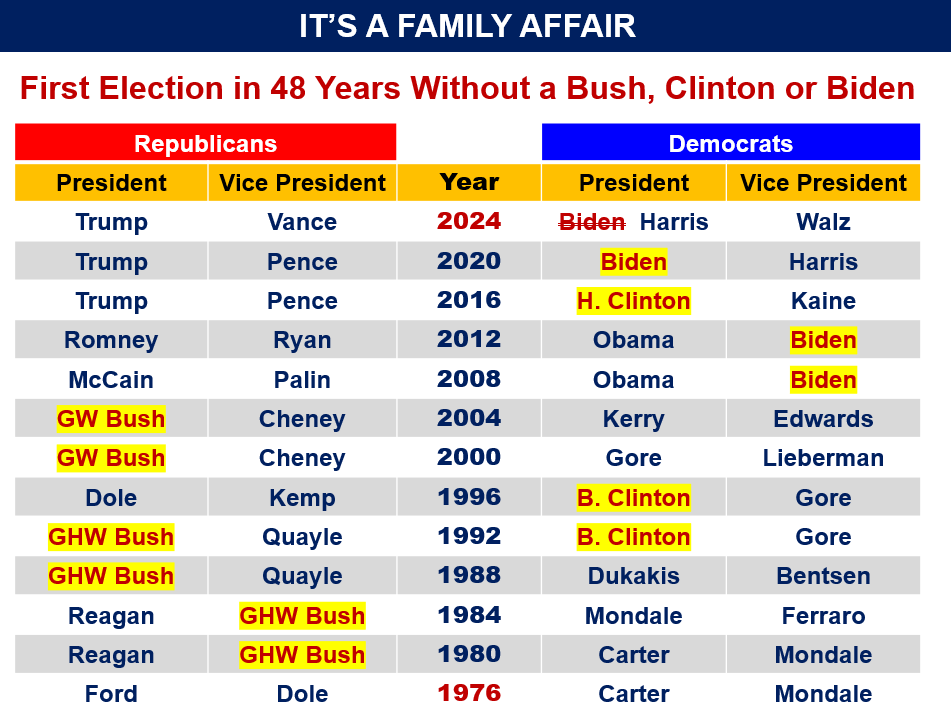
Many posts have discussed the presidency.

Many posts have discussed impeachment, including the impeachment of former officials.
At The Bulwark, Jill Lawrence compares Trump to presidents who faced articles of impeachment:
Richard Nixon’s central role in covering up the 1972 Watergate scandal, in which Nixon-campaign spies broke into and bugged the Democratic National Committee office in the Watergate complex in Washington, led two years later to the first and so far only presidential resignation. The House Judiciary Committee approved three articles of impeachment charging Nixon with obstructing its Watergate inquiry, abusing his power by using law enforcement and intelligence agencies to investigate his enemies, and refusing to comply with congressional subpoenas. Nixon resigned before a full House vote, after Republican senators told him the Senate would likely convict him of the charges.
Does Trump check any of these boxes? For sure, and right out in the open, starting with his executive order this month that “directs” Attorney General Pam Bondi to investigate ActBlue for possible foreign or dummy contributions (but did not include WinRed, the GOP counterpart, as the AP noted). Trump has also gone after law firms he sees as enemies—threatening to cancel federal contracts, suspend security clearances, and bar lawyers from all federal buildings because he doesn’t like their clients or their diversity, equity, and inclusion (DEI) programs. He’s unleashed similar attacks—and punishment—on universities as well.
Has Trump obstructed justice since taking office this year? It’s more like flouting justice and ignoring the courts. He and his team, including Elon Musk, have shut down investigations, slow-walked or withheld information, and ignored court orders, not least regarding deportations that have sent three children who are U.S. citizens to Honduras and roughly 175 Venezuelans with no criminal record to a nightmare Salvadoran prison, all without due process.
As for compliance with subpoenas, Trump “directed Executive Branch agencies, offices, and officials not to comply” with House subpoenas in the chamber’s 2019 impeachment inquiry, and early signs this time around are not encouraging.
Bill Clinton was impeached in 1998 for lying under oath to a grand jury and for obstructing justice. The charges stemmed from an independent counsel investigation into an Arkansas real estate deal involving the Clintons and morphed into Kenneth Starr’s graphic report on Clinton’s affair with a young White House intern, Monica Lewinsky. The full House approved two of four impeachment articles, but Clinton was acquitted in a Senate trial.
Has Trump lied about sex or covering it up? E. Jean Carroll has accused him of sexually assaulting her in the 1990s in a department store dressing room, and filed two civil defamation suits against him. Trump denied in a deposition and in brief testimony last year that he had ever met her, but two juries have found him liable and courts have awarded Carroll tens of millions in damages. Trump has repeatedly denied he had sex with porn actress Stormy Daniels, but he did not take the stand in last year’s hush-money trial. Daniels testified in detail about the alleged encounter, and Trump lawyer Michael Cohen testified that Trump signed off on all aspects of schemes to bury stories about extramarital affairs. The jury convicted Trump of 34 felonies in connection with falsifying business records to disguise the payoffs.


Many posts have discussed the deficit and the debt. Policymakers and the general public have tended to ignore these problems in recent years,
In 1994, President Clinton named Bob Kerrey and John Danforth to lead a bipartisan commission on entitlements and tax reform. It made little headway. They write at WSJ:
But there was near unanimity within the commission on the scale of the problem. Entitlements were on an unsustainable trajectory. They consumed an ever-growing share of federal spending. In 1994 the budget deficit was $203 billion (2.8% of gross domestic product), and the national debt was $3.4 trillion (47.8% of GDP).
The crisis we identified 27 years ago seems negligible given where the debt stands today. The nonpartisan Congressional Budget Office estimated in January 2020 that annual budget deficits will exceed $1 trillion, and that the debt—then hovering at $17.2 trillion—would more than double as a share of the economy over the next 30 years. These numbers don’t take into account $65 trillion of unfunded liabilities for Social Security and Medicare. The CBO now projects that, under current law, the deficit will reach $1.9 trillion in 10 years and the debt will skyrocket from 102% to 202% of GDP within 30 years.
The words “current law” are critical as the CBO forecasts only what will happen should government make no changes in spending and tax policies. But President Biden has already proposed $5 trillion in additional spending over the next 10 years, much of it for new or expanded entitlements, labeled “infrastructure” and “investment.”
Beyond the numbers, the biggest difference between then and now is that in 1994 both parties worried about deficits and debt. Today, neither Democrats nor Republicans seem to care. Under President Trump, the national debt grew from 76% of GDP to 100%. Under Mr. Biden’s first budget proposal, the debt is expected to reach 117% of GDP by 2031.
While politicians in both parties toss fiscal restraint to the winds, the good news is that a hefty proportion of voters are still concerned about the debt. An Ipsos poll conducted April 23-26 found that 75% of respondents believe too much debt can hurt the economy.
Current figures suggest that the federal government is digging America into a hole. According to CBO’s baseline projections—which don’t account for Mr. Biden’s proposals—interest costs will surpass spending for Social Security by 2045 and will consume nearly half of federal revenue in 2051.
Despite the urgency of the problem, nearly every elected official in Washington is an original co-sponsor of the “do nothing” plan. While today’s hyperpartisan political environment makes it unlikely that our fiscal crisis will be resolved anytime soon, elected officials would do well to take at least some action to address the issue.
In practice, the IRA's influence operatives dedicated the balance of their effort to establishing the credibility of their online personas, such as by posting .innocuous content designed to appeal to like-minded users. This innocuous content allowed IRAinfluence operatives to build character details for their fake personas, such as a conservative Southerner or a liberal activist, until the opportune moment arrived when the account was used to deliver tailored "payload content" designed to influence the targeted user. By this concept of operations, the volume and content of posts can obscure the actual objective behind the influence operation. "If you're running a propaganda outfit, most of what you publish is factual so that you're taken seriously," Graphika CEO and TAG researcher John Kelly described to the Commttee, "[T]hen you can slip in the wrong thing at exactly the right time."
(U) The tactic of using select payload messages among a large volume of innocuous content to attract and cultivate an online following is reflected in the posts made to the IRA's "Army of Jesus" Facebook page. The page, which had attracted over 216,000 followers by the time it was taken down by Facebook for violating the platform's terms of service, purported to be devoted to Christian themes and Bible passages. The page's content was largely consistent with this facade. The following series of posts from the "Army of Jesus" page illustrates the use of this tactic, with the majority of posts largely consistent with the page's theme, excepting the November 1, 2016 post that represents the IRA's payload content:
- October 26, 2016: "There has never been a day when people did not need to walk with Jesus."
- October 29, 2016: "I've got Jesus in my soul. It's the only way I know .... Watching every move I make, guiding every step I take!"
- October 31, 2016: "Rise and shine-realize His blessing!"
- October 31, 2016: "Jesus will always be by your side. Just reach out to Him and you'll see!"
- November 1, 2016: "HILLARY APPROVES REMOVAL OF GOD FROM THE
- PLEDGE OF ALLEGIANCE."
- November 2, 2016: "Never hold on anything [sic] tighter than you holding unto God!"
His troubles, some long hidden, surfaced in the summer of 2016. The Podesta Group lost its banker over news the firm did work for the U.S. subsidiary of a Russian bank under sanctions. Then came headlines that the firm’s work with Paul Manafort, Mr. Trump’s former campaign chairman, and an associate may have violated government rules. And in October, WikiLeaks published 20,000 pages of emails stolen from his brother John Podesta, chairman of Mrs. Clinton’s presidential campaign.
The string of embarrassing news accounts disturbed many of the Podesta Group’s corporate clients, companies that preferred to stay clear of such publicity. Mr. Podesta operated as if the whole mess would soon blow over.
He spent most of the fall traveling the world. He returned to the U.S. on Election Day but skipped Mrs. Clinton’s campaign party. Her victory would go a long way to fixing many of his problems. She lost that night, and Mr. Podesta, like many who had banked on her victory, did too.
Clients who had hired him for access to a new Clinton administration fell away. By the end of the year, the departures cost the firm more than $10 million in annual business, according to an internal Podesta Group accounting viewed by The Wall Street Journal.
When more than a dozen women stepped forward and accused Leon Wieseltier of a serial and decades-long pattern of workplace sexual harassment, he said, “I will not waste this reckoning.” It was textbook Wieseltier: the insincere promise and the perfectly chosen word. The Democratic Party needs to make its own reckoning of the way it protected Bill Clinton. The party needs to come to terms with the fact that it was so enraptured by their brilliant, Big Dog president and his stunning string of progressive accomplishments that it abandoned some of its central principles. The party was on the wrong side of history, and there are consequences for that. Yet expedience is not the only reason to make this public accounting. If it is possible for politics and moral behavior to coexist, then this grave wrong needs to be acknowledged. If Weinstein and Mark Halperin and Louis C. K. and all the rest can be held accountable, so can our former president and so can his party, which so many Americans so desperately need to rise again.Matthew Yglesias at Vox:
At the time I, like most Americans, was glad to see Clinton prevail and regarded the whole sordid matter as primarily the fault of congressional Republicans’ excessive scandal-mongering. Now, looking back after the election of Donald Trump, the revelations of massive sexual harassment scandals at Fox News, the stories about Harvey Weinstein and others in the entertainment industry, and the stories about Roy Moore’s pursuit of sexual relationships with teenagers, I think we got it wrong. We argued about perjury and adultery and the meaning of the word “is.” Republicans prosecuted a bad case against a president they’d been investigating for years.
What we should have talked about was men abusing their social and economic power over younger and less powerful women.
[Even] after the Central Intelligence Agency and the Federal Bureau of Investigation reported that Russia was responsible for the leaks of damaging information from the Democratic National Committee and the Clinton campaign and that the hacking was done to help Donald Trump win the Presidency, only one in five say that is definitely true, about the same percentage as believe it is definitely not true. A majority is in the middle.
...
Once a story is believed, it also seems to stay believed. Donald Trump may have proclaimed that President Obama was born in the United States (having doubted that for years), but half of his supporters still think that it is at least probably true that the President was born in Kenya. And in the U.S. as a whole, a majority believes that in 2003, when the United States invaded Iraq, Saddam Hussein had weapons of mass destruction that the U.S. never found.
...
Half of Clinton’s voters think Russia even hacked the Election Day votes (only 9% of Trump voters give that any credibility at all). Six in ten Trump voters believe there were millions of illegal votes cast on election day. One in four Clinton voters agree with that, though it’s likely that the illegal votes Clinton voters think were cast were quite different from the illegal votes Trump voters see. In an Economist/YouGov Poll conducted a few days after the election, just 2% of those who voted on Election Day said they saw any ineligible voters trying to cast a ballot (and there was almost no difference in the proportion of Clinton supporters and Trump supporters saying this).
Much of the spoils have been concentrated on the high end. A study by Weiss Analytics, a housing-data firm, found homes in ZIP Codes where the median value is $500,000 to $1 million are now worth 103% more than they were 16 years ago, before a boom in the mid-2000s was followed by the worst housing crash since the Great Depression. Home prices in those areas have shot up 39% since the bust.
Yet many places around the U.S. missed out on the recent boom, with prices remaining essentially flat during the same period. In ZIP Codes where the median home was worth $100,000 to $150,000, prices have risen 16% since the trough of the market and are now worth 24% more than they were in 2000.
The contrast offers one explanation for the frustration building in the mostly rural, middle-American areas that helped propel Donald Trump to victory in the presidential election. In counties that voted for Mr. Trump, home prices have been largely flat for the past 15 years, according to a county-by-county analysis of home values and voting patterns by real-estate tracker Zillow.
In areas that went for Hillary Clinton—mostly coastal urban areas such as California’s major markets—home values plunged from 2006-2012 but have roared back since.
Americans are evenly divided in their assessment of the way Donald Trump is handling his presidential transition, with 48% approving and 48% disapproving. By contrast, 65% or more approved of the way the past three presidents-elect were handling their transitions at similar points in time, including 75% for Barack Obama in December 2008.
Net approval:
Donald Trump and Hillary Clinton head into the final hours of the 2016 presidential campaign with the worst election-eve images of any major-party presidential candidates Gallup has measured back to 1956. Majorities of Americans now view each of them unfavorably on a 10-point favorability scale, a first for any presidential standard-bearer on this long-term Gallup trend. Trump's image is worse than Clinton's, however, with 61% viewing him negatively on the 10-point scale compared with 52% for her.
According to a POLITICO/Morning Consult study conducted by Morning Consult this past weekend and released Thursday, a hidden army of Trump voters that's undetected by the polls is unlikely to materialize on Election Day.
The study — which was composed of interviews with likely voters conducted over the phone with a live interviewer, and other interviews conducted online without a personal interaction — showed only a slight, not-statistically-significant difference in their effect on voters’ preferences for president.
Mr. Trump may yet win this election. But if he does, it probably won’t be because of a huge influx of Republican-leaning “missing” voters.
There has been no surge in registration among white voters since 2012, and the white voters who have joined the electorate are younger and likelier to support Mrs. Clinton than those who were already registered.
Hillary Clinton has built a commanding lead over Donald J. Trump in national polls, but she still has one big weakness: white working-class voters, especially men.
Even now, she is underperforming any recent Democratic candidate among white voters without a college degree.
It’s a very different story from 2008, when Barack Obama built a big national lead by attracting white working-class voters in states like Wisconsin and Indiana.
Instead, Mrs. Clinton’s gains come from big margins among well-educated voters and an electorate that’s much more diverse than it was even a decade ago.
The result is a sharp increase in polarization along demographic lines of race, education and gender — yet a decrease in geographic polarization. The predictable electoral map of the last four elections, born in part of the culture wars and split along familiar regional divides, might not look quite the same this November.
During the debate between Clinton and Trump last night [10/19], Eric Metaxas tweeted the following:
Hillary misquoting Tocqueville is like Reagan misquoting Marx.— Eric Metaxas (@ericmetaxas) October 20, 2016
Hillary said in passing that “America is great because America is good.” Although the quote is commonly associated with Tocqueville, it can’t be found in his works.
During the debate, Clinton did not attribute the quote to Tocqueville. However, Metaxas himself attributed that quote to Tocqueville in an advance copy of his new book If You Can Keep It. The attribution of the quote was corrected before publication.
THE BIG IDEA: The consensus that Donald Trump badly lost the first debate gelled overnight. Liberals predictably panned the GOP nominee’s performance on Long Island, but some of the harshest reviews are coming from conservative thought leaders who had been starting to come around.
-- Instant reaction:
Republican pollster Frank Luntz conducted a focus group of undecided voters in Pennsylvania. Sixteen said Hillary Clinton won. Five picked Trump, per CBS News.
In a Florida focus group organized by CNN, 18 of 20 undecided voters picked Clinton as the winner.
Not one of 29 undecided voters in an Ohio focus group organized by Park Street Strategies thought Trump prevailed, while 11 picked Clinton and the rest said neither. By a two-to-one margin, the group thought Clinton had the better tone and, by a three-to-one margin, they thought she came across as more knowledgeable candidate on the issues.
A CNN/ORC flash poll found that 62 percent said the Democrat won, compared to 27 percent who picked Trump. That’s on par with 2012, when Mitt Romney was seen as the winner of the first debate.
In a separate instant-poll from the Democratic firm Public Policy Polling, 51 percent said Clinton won and 40 percent picked Trump.
Eight in 10 insiders in the key battleground states thought Clinton performed better, including 57 percent of Republicans, according to the Politico Caucus survey.
A new national survey finds that Trump supporters overwhelmingly believe that life in America is worse than it was 50 years ago “for people like them.” Fully 81% of registered voters who support Trump say life has gotten worse, compared with just 11% who say it has gotten better (6% say it is about the same).
Most Clinton supporters take the opposite view: 59% say life for people like them has gotten better over the past half-century, while 19% think it has gotten worse and 18% see little change.
The candidates’ supporters have contrasting expectations for the nation’s future. Trump backers are broadly pessimistic – 68% say life for the next generation will be worse than today. Clinton supporters have mixed assessments. Nearly four-in-ten (38%) say life will be better, 28% say it will be about the same and just 30% say it will be worse
In an increasingly contentious presidential campaign, just a quarter of voters who support Donald Trump in the general election say they have a lot or some close friends who are supporters of Hillary Clinton. Even fewer Clinton backers (18%) say they have at least some friends who support Trump.
Nearly half of Clinton supporters (47%), and 31% of Trump supporters, say they have no close friends who support the opposing candidate.
The survey conducted June 7-July 5 among 4,602 adults, including 3,834 registered voters, on Pew Research Center’s nationally representative American Trends Panel finds that large majorities of both Trump and Clinton supporters have friends who back their preferred candidates.
More than four-in-ten Trump supporters (44%) say they have a lot of close friends who back Trump, while another 38% say they have some friends who support him. Similarly, most Clinton supporters say they have a lot (41%) or some close friends (40%) who also express support for Clinton.
"America is great because America is good,” said Hillary Clinton during her acceptance speech at the Democratic National Convention. Immediately, her critics went on social media to accuse her of plagiarizing Alexis deTocqueville, French author of the 19th-century classic, "Democracy in America." But Tocqueville never wrote any such thing.
Various forms of the spurious quotation (often including such purple prose as “pulpits aflame with righteousness”) have been circulating for decades. It is unclear where it all started, except that we do know that these words appear nowhere in Tocqueville’s works. Nevertheless, politicians of all stripes have long been fond of using the lines, usually with the false attribution. Indeed, one repeat offender was none other than President Bill Clinton. He credited Tocqueville with saying “America is great” on many occasions – including the video that preceded his own acceptance speech at the 1996 Democratic convention.
It’s purely a guess, but it seems plausible that Mrs. Clinton or her speechwriter heard the phrase in that video and decided to recycle it 20 years later. One cannot charge her with plagiarizing Tocqueville since the latter didn’t write it in the first place. But was she plagiarizing her husband? Maybe it doesn’t count if it’s all in the family, or perhaps the phrase is so short and familiar that it comes under the heading of “common knowledge.” I will leave such judgments to the experts in literary ethics.
On Tuesday, when Hillary Clinton became the first female nominee of a major party, a handful of drug companies and health insurers made sure to echo the theme, paying to sponsor an “Inspiring Women” panel featuring Democratic congresswomen.
And in the vaulted marble bar of the Ritz-Carlton downtown, wealthy givers congregated in force for cocktails and glad-handing, as protesters thronged just outside to voice their unhappiness with Wall Street, big money in politics and Mrs. Clinton herself.
“This is a good place to be — for a lot of reasons,” said former Gov. Charlie Crist of Florida, a Democrat now running for Congress, as he glided through the room on Tuesday. “We must have set up five fund-raisers today. This is the bank.”
...
“I think we’re past that,” said Alan Patricof, a longtime donor to Mrs. Clinton, when asked about the need to lie low during the primaries.
...
The Philadelphia convention offered other symbolic contrasts to the party’s last two gatherings, when President Obama sought, with mixed success, to restrict his party from raising money to pay for the conventions from lobbyists or political action funds. Those shackles were thrown off this year, waving a green flag to Washington’s influence industry. Lobbyists and corporate representatives flooded the city, where much of the Democratic Party’s elite — and potential senior members of a future presidential administration — had gathered.
One of the things that I have learned about Hillary Clinton is that one of her heroes, her mentors, was Saul Alinsky [CROWD BOOES]. Her senior thesis was about Saul Alinsky. This was someone that she greatly admired and that affected all of her philosophies subsequently. Now, interestingly enough, let me tell you something about Saul Alinsky. He wrote a book called “Rules For Radicals”. On the dedication page, it acknowledges Lucifer, the original radical who gained his own kingdom. Now think about that. This is a nation where our founding document, the Declaration of Independence, talks about certain inalienable rights that come from our creator. This is a nation where our Pledge of Allegiance says we are “one nation, under God”. This is a nation where every coin in our pocket and every bill in our wallet says “In God We Trust”. So are we willing to elect someone as president who has as their role model somebody who acknowledges Lucifer? Think about that.
“Lest we forget at least an over the shoulder acknowledgment to the very first radical: from all our legends, mythology and history (and who is to know where mythology leaves off and history begins - or which is which), the very first radical known to man who rebelled against the establishment and did it so effectively that he at least won his own kingdom - Lucifer.”(Other epigraphs on the page are from Hillel and Thomas Paine.)