Search This Blog

Showing posts with label New Jersey. Show all posts

Saturday, September 23, 2023

The Menendez Indictment

From DOJ 

According to the allegations in the Indictment unsealed today in Manhattan federal court:[1]

ROBERT MENENDEZ is the senior U.S. Senator from New Jersey and currently the Chairman of the Senate Foreign Relations Committee (“SFRC”). NADINE MENENDEZ began dating MENENDEZ in February 2018, they became engaged in October 2019, and they married in October 2020. Shortly after they began dating in 2018, NADINE MENENDEZ introduced MENENDEZ to her long-time friend WAEL HANA, who is originally from Egypt, lived in New Jersey, and maintained close connections with Egyptian officials. HANA was also business associates with FRED DAIBES, a New Jersey real estate developer and long-time donor to MENENDEZ, and JOSE URIBE, who worked in the New Jersey insurance and trucking business.
Between 2018 and 2022, MENENDEZ and NADINE MENENDEZ agreed to and did accept hundreds of thousands of dollars’ worth of bribes from HANA, DAIBES, and URIBE. These bribes included gold, cash, a luxury convertible, payments toward NADINE MENENDEZ’s home mortgage, compensation for a low-or-no-show job for NADINE MENENDEZ, home furnishings, and other things of value. In June 2022, the FBI executed a search warrant at the New Jersey home of MENENDEZ and NADINE MENENDEZ. During that search, the FBI found many of the fruits of this bribery scheme, including cash, gold, the luxury convertible, and home furnishings. Over $480,000 in cash — much of it stuffed into envelopes and hidden in clothing, closets, and a safe — was discovered in the home, as well as over $70,000 in cash in NADINE MENENDEZ’s safe deposit box, which was also searched pursuant to a separate search warrant. Some of the envelopes contained the fingerprints and/or DNA of DAIBES or his driver. Other of the envelopes were found inside jackets bearing MENENDEZ’s name and hanging in his closet, as depicted below.

...

 As part of the scheme, MENENDEZ provided sensitive, non-public U.S. government information to Egyptian officials and otherwise took steps to secretly aid the Government of Egypt. For example, in or about May 2018, MENENDEZ provided Egyptian officials with non-public information regarding the number and nationality of persons serving at the U.S. Embassy in Cairo, Egypt. Although this information was not classified, it was deemed highly sensitive because it could pose significant operational security concerns if disclosed to a foreign government or made public. Without telling his professional staff or the State Department that he was doing so, on or about May 7, 2018, MENENDEZ texted that sensitive, non-public embassy information to his then-girlfriend NADINE MENENDEZ, who forwarded the message to HANA, who forwarded it to an Egyptian government official. Later that same month, MENENDEZ ghost-wrote a letter on behalf of Egypt to other U.S. Senators advocating for them to release a hold on $300 million in aid to Egypt. MENENDEZ sent this ghost-written letter to NADINE MENENDEZ, who forwarded it to HANA, who sent it to Egyptian officials.


At various times between 2018 and 2022, MENENDEZ also conveyed to Egyptian officials, through NADINE MENENDEZ, HANA, and/or DAIBES, that he would approve or remove holds on foreign military financing and sales of military equipment to Egypt in connection with his leadership role on the SFRC. For example, in or about July 2018, following meetings between MENENDEZ and Egyptian officials, which were arranged and attended by NADINE MENENDEZ and HANA, MENENDEZ texted NADINE MENENDEZ that she should tell HANA that MENENDEZ was going to sign off on a multimillion-dollar weapons sale to Egypt. NADINE MENENDEZ forwarded this text to HANA, who forwarded it to two Egyptian officials, one of whom replied with a “thumbs up” emoji. MENENDEZ made similar communications over the ensuing years. For example, in January 2022, MENENDEZ sent NADINE MENENDEZ a link to a news article reporting on two pending foreign military sales to Egypt totaling approximately $2.5 billion. NADINE MENENDEZ forwarded this link to HANA, writing, “Bob had to sign off on this.”
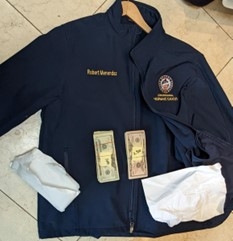

Picture of jacket bearing Menendez’s name with money on top of it
Picture of gold bar
Picture of gold bar

I


Sunday, February 24, 2019

Sometimes, the "I'm Just a Bill" Model Really Works

Lisa Mascaro at AP writes about a group of New Jersey high school students who got Congress's attention for a bill.
The students’ interest began in 2015, when teacher Stuart Wexler’s Advanced Placement government and policy class at Hightstown High was studying the civil rights movement. They couldn’t believe that in America, so many criminal cases involving racial violence and death could remain unsolved.
Srihari Suvramanian, 17, a senior, said in an Associated Press telephone interview with the class: “It’s just atrocious that these individuals have gotten away with crimes committed decades ago, for so long, even though the majority of Americans know it’s wrong.”
He added: “We think it’s very important to provide a sense of closure. Even if we can’t get a full sense of closure, maybe provide some answers to the people that were denied justice.”
The students crowdsourced a list of cases, filed Freedom of Information Act requests and then waited. Research on old cases often runs into dead ends, and they could imagine the difficulties that families go through trying to get answers.
They turned their attention to Congress.
The President John F. Kennedy Assassination Records Collection Act of 1992, which collects records at the National Archives from the assassination, provided a model for the legislation they wanted. They took bus trips to Washington to find supporters. Rep. Bobby Rush, D-Ill., was among the first to sign on, inspired, his office said, by the work and the possibility it held.

Then Democrat Doug Jones won a Senate seat from Alabama in December 2017. They had already reached out to Jones, the U.S. attorney who won convictions after reopening the 16th Street Baptist Church bombing case from 1963 in Birmingham.
Six months after he was sworn in as the first Democratic senator from Alabama in a generation, Jones stood on the Senate floor and introduced the bill that would become the Civil Rights Cold Case Collection Act. The students watched from the gallery above.

Monday, December 3, 2018

1988

Looking back, 1988 was a turning point. It would be the last time any presidential candidate broke 400 votes in the electoral college, the last time California, New Jersey and Illinois went red. What was up until then viewed as the Republican lock would give way in four short years.
After that night, no non-incumbent Republican would again lead the popular vote. The Democratic party would capture a plurality in six of the next seven presidential elections. Flyover country would emerge as a contiguous Republican bastion, Democrats relegated mostly to the coasts. Another realignment was under way.
...
 Back in the day, the president’s father was a senator from Connecticut and a golf partner to President Eisenhower. Now, the Nutmeg state’s entire congressional delegation is Democratic. Ned Lamont, governor-elect, played golf at the country club where George met Barbara Bush.
No Republican has carried these states since Bush in 1988:
  • California
  • Connecticut
  • Delaware
  • Illinois
  • Maine
  • Maryland
  • New Jersey
  • Vermont


Friday, November 10, 2017

Expulsion from the Senate

Senator Robert Menendez (D-NJ) is on trial for bribery.  If the jury convicts him, there would surely be a move for his expulsion.  Accused child molester Roy Moore could actually win a Senate race in Alabama. If so, the Senate would have to seat him, but then it could expel him.

From the Congressional Research Service:
The authority of the United States Senate (as well as of the House) to establish the rules for its own proceedings, to “punish” its Members for misconduct, and to expel a Member by a vote of two-thirds of Members present and voting, is provided in the Constitution at Article I, Section 5, clause 2. This express grant of authority for the Senate to expel a Senator is, on its face, unlimited — save for the requirement of a two-thirds majority. In the context of what the Supreme Court has characterized as, in effect, an “unbridled discretion” of the body, expulsions in the Senate, as well as the House, have historically been reserved for cases of the most serious misconduct: disloyalty to the government or abuses of one’s official position. The Senate has actually expelled only 15 Members — 14 of those during the Civil War period for disloyalty to the Union (one of these expulsions was subsequently revoked by the Senate), and the other Senator during the late 1700s for disloyal conduct. The House of Representatives has expelled only five Members in its history, three during the Civil War period, one in 1980, and another in 2002, after convictions for bribery and corruption offenses related to official congressional duties. In the Senate, as well as in the House, however, other Members for whom expulsion was recommended have resigned from office prior to official, formal action by the institution.
...

Friday, March 7, 2014

Governors and Credit-Claiming

At The New York Times, Timothy Egan says that California is doing well.
It’s unfair to give all credit for the Golden State revival to Jerry Brown. But the man, who will be 76 next month and was both the youngest and oldest governor of California, and who just announced a plan to run for a fourth term with an approval rating approaching 60 percent, deserves the lion’s share.
This article overlooks some important things.  By one measure, California has the highest poverty rate in the United States.  By another, it has one of the highest levels of inequality. The roads are bad and the schools are mediocre.  As the governor has acknowledged, unfunded liabilities are a big threat, and some cities have already gone bankrupt.

True, the state did not have a budget crisis last year.  But if Brown deserves the "lion's share" of credit, why are so many other states -- pursuing very different policies -- doing just as well?

Jerry Brown, Chris Christie and many of their fellow governors across the country are taking credit for the effects of a national economic recovery.

A few years ago, the effects of the Great Recession were causing huge fiscal problems for the states.  Demands for spending were up and revenues were down.


In California, Brown sees an improved fiscal situation and says his policies are responsible.  In Wisconsin, Scott Walker sees an improved fiscal situation and says his policies are responsible – even though his agenda is different from Brown’s.  (See his book Unintimidated.)  Ditto Chris Christie in New Jersey, Rick Snyder in Michigan, and Andrew Cuomo in New York.  Some states are in trouble (e.g., Illinois), but most governors of both parties are in good shape. 

Of course, if there is a downturn, these same governors will morph from heroes to goats, even though they aren’t any more responsible for recessions than for recoveries.

Wednesday, November 6, 2013

Christie and the 2013 Elections

Our chapter on elections discusses state and local races, and our chapter on federalism features of photo of New Jersey Governor Chris Christie (who just won reelection) with Cory Booker, the Newark mayor who has become a US senator.  At The Daily Beast, Lloyd Green writes that Christie's landslide reelection yesterday puts him into presidential contention:
As he goes forward, Christie will need to address the questions that clouded his consideration as Romney’s running-mate. Christie will need to assure the party about his own integrity, and his tendency to conflate government with his own self. “Steering government contracts to friends and political allies” is not the best trait for a former federal prosecutor.

Still, the nation having endured Bill Clinton and the Devil in the Blue Dress, Bush 43’s eleventh-hour disclosures about driving under the influence, Obama’s alleged sweetheart deal with corrupt businessman Tony Rezko, and Romney’s offshore and overseas investments, Christie is far from being out of contention.

America has re-defined deviancy down. If a plagiarizing Joe Biden can become vice president, while a plagiarizing Rand Paul can mull the presidency, and a grifting Hillary Rodham Clinton can be the Democrats' leading contender, then Christie should be allowed his moment of glory.

Christie has done more than just log frequent flier miles by jetsetting around the world. He has demonstrated that bipartisanship is more than a dream or a speech applause line. Christie showed that he could reach across the aisle during Superstorm Sandy and he did it again on Election Day, winning two thirds of independents and a third of Democrats.

The scrum over the nation’s future did not end yesterday. The results remained too equivalent. Rejection of Obamacare was not enough to carry the day for Cuccinelli. The Tea Party lost, but it was not vanquished. In New York City, Bill de Blasio—an ex-Sandalista—romped to election as Mayor, while across the Hudson River, a moderate conservative had a landslide win of his own. There was something for everyone.

Thursday, December 20, 2012

Booker's Books

In a video announcing that he will explore running for the US Senate, Newark Mayor Cory Booker appeared with several books to his side.  His choice of books illustrates both the importance of religion in American politics, as well as its increasing pluralism. The books are:

  •  Two versions of the Bible,
  •  The Tanakh (Jewish Holy Scriptures),
  • The Qur'an, and 
  • The Bhagavad Gita (Hindu)


Saturday, November 3, 2012

More on Sandy and Turnout

As previous posts have noted, Hurricane Sandy may have some effect on voter turnout  in the New York metropolitan area. There is no chance that New York, New Jersey, or Connecticut will switch from Obama to Romney, but their overall vote totals may be down, which in turn could affect the president's national vote margin. There is some talk of invoking a New York law allowing for a second day of voting, but because a presidential election is taking place, there would be serious constitutional questions about such a move.

From NBC, an estimate of the vote drop that is less conservative than mine:
President Obama stands to lose as many as 340,000 votes as a result of Hurricane Sandy, not enough to affect the outcome in heavily Democratic Northeastern states, but something that could make a difference in the popular vote if the results of Tuesday’s presidential race are as close as polls indicate, a First Read analysis finds.
“Sandy has the potential to reduce Obama's national popular vote share by depressing turnout in highly Democratic areas along the Eastern Seaboard,” Dr. Michael McDonald of George Mason University, who studies turnout, told First Read. “The storm is unlikely to change the Electoral College outcome, as Obama is heavily favored to win the affected states. A turnout drop could be the difference in a close national election, and thus could shape the political discourse over important policy issues in a possible Obama second term.”

For example, assuming 2008 vote totals and a 15 percent reduction in turnout in the coastal counties most affected by Hurricane Sandy in New York, New Jersey, Connecticut, and Rhode Island, Obama would lose a net of 340,000 votes, including 247,000 out of New York, 60,000 from New Jersey, 29,000 from Connecticut, and 3,600 from Rhode Island.
From The New York Daily News:
Voting will take place on Tuesday, Nov. 6, as scheduled, but scores of polling stations will likely be moved or operating off generators, election officials said. In New Jersey, paper ballots will be used and military trucks will serve as polling sites in some areas. New Yorkers are dealing with a “fluid” situation, said John Conklin, spokesman for the New York State Board of Elections.

“We are doing an assessment of power, safety, and the ability to get voting machines in and out of the facilities,” Conklin told the Daily News on Friday. “We will decide if and when to move a polling station once that is done,” he said.

In areas of Staten Island and Queens, flooding was so severe that some sites might not be accessible. The Staten Island Board of Elections office had to close. So too did the Manhattan office, which is now sharing space at the Borough's Voting Machine Facility.
There’s no set timeline as to when a polling station will be moved ahead of Tuesday, Conklin said. He stressed conditions are “constantly changing. It’s a fluid situation.”
From WCBS in New York:
Connecticut state officials from Gov. Dan Malloy on down are denying rumors that the election has been cancelled.
About 50 polling locations in Connecticut lack power and more than a dozen are so badly damaged that there is no way voting can take place there.
In Greenwich, Republican Registrar of Voters Fred DeCaro said there are blocked driveways and roads.
“Accessibility is still an issue for people to get out from their house,” he told WCBS 880 reporter Paul Murnane.
Connecticut Secretary of the State Denise Merrill was reluctant to move too many voting locations.
“Really, people get so confused and they’re already under all this stress. So, that, I think would help to depress turnout, I’m afraid,” she said. 
From The Philadelphia Inquirer:
With an untold number of residents displaced because of Hurricane Sandy and problems with power outages at polling places, some voters will face added challenges in exercising their basic right.
The Christie administration's answer: Vote early.
The state has ordered county election offices to remain open through the weekend so anyone with concerns about voting on Tuesday can cast a paper ballot in advance.
After receiving reports from the state's 21 counties, Gov. Christie said Friday that it appeared only 10 polling places statewide would be entirely inaccessible Tuesday.
Officials did not say how many other sites might be affected by other problems, such as loss of power.
In some cases, the governor said, voters will go to their usual polling locations to find trucks or trailers where they can vote "old school" by paper ballot.
"Everybody in New Jersey will have a way to vote," he said. "It will probably take us longer to count the votes, but it will be a late night anyway."
As for voters who have relocated far from their home counties and do not plan to return by Tuesday, they are out of luck, unless they have posted mail-in ballots

Friday, November 2, 2012

Sandy and a Split Election Outcome

As mentioned before, Hurricane Sandy has plagued the New York metropolitan area with power outages, gas lines, and various kinds of property damage.  Election Day is Tuesday, and many people may not have time to vote, or be able to reach polling places.  The aftermath will probably depress voter turnout, at least a little.  Suppose that about the same number of people were going to vote as in 2008, and suppose further that the storm will reduce this number by five percent.  The area is heavily Democratic, so a five percent reduction in turnout would make a dent in President Obama's national popular vote margin.  

We can calculate the effect by looking at a dozen counties:  the five that make up New York City, along with Nassau County on Long Island, and six nearby counties  in New Jersey.  In 2008, President Obama won this set of counties by 2,028,123 votes (see below).  Reducing this figure by five percent would cut the president's aggregate vote margin by 101,406.  In a very close national election, this effect could cost the president a plurality in the popular vote even if he wins in the electoral college.

Of course,  this calculation involves guesswork and arbitrary assumptions.  You could reach a higher or lower figure by including additional counties or assuming a different percentage reduction.  But it is still reasonable to conclude that Sandy has increased the possibility of a split in the popular and electoral vote.


County........Obama 2008 margin

Bronx
296,578
Kings
451,653
New York
482,421
Queens
325,471
Richmond
-6,751
Nassau
53,409
Bergen
39,249
Essex
166,243
Hudson
98,780
Middlesex
70,117
Monmouth
-11,696
Union
62,649
2028123

Tuesday, October 30, 2012

Sandy and a Split Election Outcome

Previous posts have discussed the possibility of a split between the popular and electoral vote. Hurricane Sandy may have increased the chances for such an outcome.

The effects have been severe in New York and New Jersey .  Property damage amounts to billion of dollars, and millions of people may not get electricity back for several days.  These problems could affect turnout in several ways.
  • First, recovering from the disaster will be tough and time-consuming.  People will have to repair their homes, restock refrigerators full of spoiled food, and make up for lost work.  Some may not have time to vote.
  • Second, even before the storm, there was a backlog of absentee ballot applications in New York City, and the hurricane will probably worsen the delay.  Some voters will not get their ballots in time.  In other states as well, the storm may hinder early voting.
  • Third, storm damage will disrupt get-out-the-vote efforts.  Though neither presidential campaign is putting resources into either state (both of which will go for Obama), many downballot campaigns and local party organizations were planning on door-to-door contact and electronic communication to mobilize supporters.   The hurricane will cost these efforts several days that they can't get back. 
In 2008, 7,640,640 New Yorkers and 3,868,237 New Jerseyans voted for president, for a total of approximately 11.5 million ballots.  If similar numbers were headed for the polls this year, and if the hurricane depressed turnout by just one percent, that's a drop of 115,000 votes, of which about 65,000 would probably go to Obama.

In this scenario, he would still carry the two states, but in an extremely close election, his national popular-vote total might dip below Romney's.  


Thursday, July 19, 2012

The Fiscal Crisis of the States


In June 2011 former New York Lieutenant Governor Richard Ravitch and former Federal Reserve Chairman Paul A. Volcker assembled a State Budget Crisis Task Force to examine fiscal threats to California, Illinois, New Jersey, New York, Texas, and Virginia. Among the findings:
Certain large expenditures are growing at rates that exceed reasonable expectations for revenues:
Medicaid programs are growing rapidly because of increasing enrollments, escalating health care costs and difficulty in implementing cost reduction proposals. At recent rates of growth, state Medicaid costs will outstrip revenue growth by a wide margin, and the gap will continue to expand.Pension funds for state and local government workers are underfunded by approximately a trillion dollars according to their actuaries and by as much as $3 trillion or more if more conservative investment assumptions are used.• Unfunded liabilities for health care benefits for state and local government retirees amount to more than $1 trillion.
The capacity to raise revenues is increasingly impaired:
• Untaxed transactions are eroding the sales tax base. Gasoline taxes are eroding as well, making it more difficult for states to finance roads, highways, and bridges.
• Income taxes have become increasingly volatile, particularly during and after the recent economic crisis.
The federal budget crisis will have serious spillover effects on state and local governments, and state actions will have spillover effects on local governments: 
• Cuts in federal grant dollars, lower spending on federal installations, procurement, and infrastructure, and potential changes to the federal tax code all threaten states’ fiscal stability.
• Pressures on local governments, caused by the weak economy and cuts in state aid, are constraining education spending, law enforcement, aid to the needy, and the institutions that make up the culture of our cities. Local government cuts pose a significant risk to the overall economic and social fabric of states.