The single speech that might well have defeated the wretched Assisted Dying Bill. pic.twitter.com/PuG1vJk9P7
— Emily Hewertson 🇬🇧 🏴 (@emilyhewertson) September 11, 2026
Showing posts with label death. Show all posts
Showing posts with label death. Show all posts
Saturday, September 12, 2026
A Speech Against Assisted Suicide
Ethos in rhetoric is an appeal to the speaker's or writer's credibility, character, and authority to sway an audience. Opposition to assisted suicide tends to be more prevalent on the political right than the political left. So in a recent House of Commons debate, one speaker demonstrated the idea of ethos: a Labor MP who has a terminal illness spoke out against an assisted suicide bill.


Monday, May 25, 2026
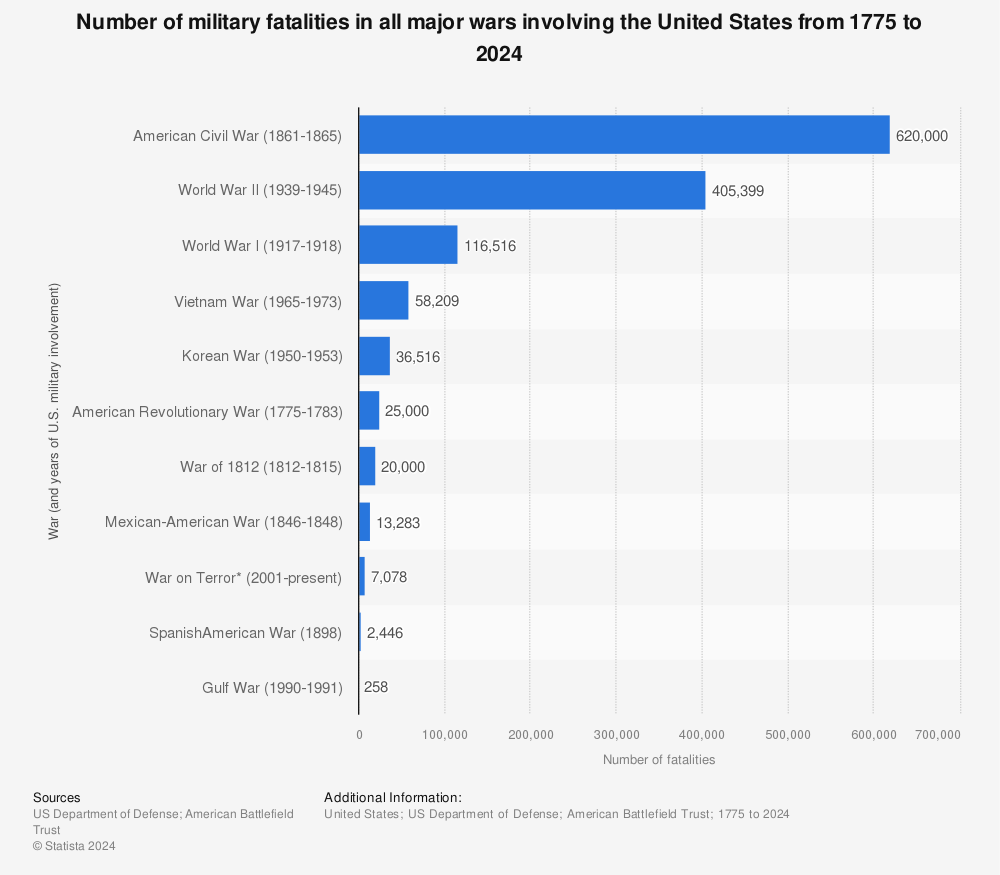
The Fallen in the Iran War
Previous posts have discussed Memorial Day. The United States is in another war, and more Americans have died.
The first six were members of a U.S. Army Reserve unit based in Des Moines, Iowa, who were killed in a strike in Kuwait on March 1. They were identified as:
Another service member who was injured in an attack at Prince Sultan Air Base in Saudi Arabia in March 1 died from his injuries seven days later, the Pentagon said. He was identified as Sgt. Benjamin N. Pennington, 26, of Glendale, Kentucky.
- Capt. Cody A. Khork, 35, of Winter Haven, Florida;
- Sgt. 1st Class Noah L. Tietjens, 42, of Bellevue, Nebraska;
- Sgt. 1st Class Nicole M. Amor, 39, of White Bear Lake, Minnesota;
- Sgt. Declan J. Coady, 20, of West Des Moines, Iowa;
- Maj. Jeffrey R. O'Brien, 45, of Waukee, Iowa;
- Chief Warrant Officer 3 Robert M. Marzan, 54, of Sacramento, California.
Six service members were killed in a crash of a U.S. refueling aircraft over Iraq on March 12. Three of the six were members of the Ohio Air National Guard assigned to the 121st Air Refueling Wing at Rickenbacker Air National Guard Base, and the other three were assigned to MacDill Air Force Base in Florida, the Defense Department said. They were identified as:
- Maj. John A. Klinner, 33, of Auburn, Alabama;
- Capt. Ariana G. Savino, 31, of Covington, Washington;
- Tech. Sgt. Ashley B. Pruitt, 34, of Bardstown, Kentucky;
- Capt. Seth R. Koval, 38, of Mooresville, Indiana;
- Capt. Curtis J. Angst, 30, of Wilmington, Ohio;
- Tech. Sgt. Tyler H. Simmons, 28, of Columbus, Ohio.
Monday, January 26, 2026
Myths, Misinformation, and Minneapolis
Besides not knowing what habeas corpus means, DHS Secretary Kristi Noem has had problems.
Top officials in President Donald Trump’s administration have responded to the killing of Alex Pretti by the Border Patrol in Minneapolis on Saturday with a torrent of claims that are either contradicted by video footage or unsupported by any evidence presented so far.
- Homeland Security Secretary Kristi Noem claimed Pretti “attacked” officers, an assertion echoed by FBI Director Kash Patel, but no footage available as of Sunday afternoon shows Pretti committing any attack.
- Noem claimed Pretti was “brandishing” a gun, but no available footage shows Pretti even holding a weapon in his hand at the scene; a concealed gun appeared to be taken from his waistband area by a federal agent moments before he was shot.
- White House deputy chief of staff Stephen Miller referred to Pretti as “an assassin” who “tried to murder federal agents,” Vice President JD Vance reposted this claim, and Border Patrol commander Gregory Bovino (and the Department of Homeland Security in a social media post) said it “looks like” Pretti “wanted to do maximum damage and massacre law enforcement.” But nobody has shown any evidence that Pretti sought to kill anyone, let alone perpetrate a massacre.
- Patel suggested that Pretti broke the law by carrying a concealed gun at a protest, but the Minneapolis police chief said Pretti had a permit to carry the gun and was allowed to have it on him as he was protesting in a public place.
Tiffany HsuStuart A. Thompson and Steven Lee Myers at NYT:
Across social media, pro-Trump influencers and others muddled the evidence of the killing of a nurse in Minneapolis on Saturday with social media posts that included misdirection and fabricated content.
While verified videos and witnesses showed how federal immigration agents tackled and shot Alex Pretti, 37, the posts tried to warp the events, including in ways intended to support the Trump administration’s claims that Mr. Pretti was at fault for his own death. Some posts smeared him or portrayed him as a radical activist.
Nick Sortor, a pro-Trump influencer with 1.4 million followers on X, incorrectly identified Mr. Pretti, a U.S. citizen, as an unauthorized immigrant. Jack Posobiec, a Trump loyalist with 3.3 million followers on X, falsely described Mr. Pretti as having “run up on police” and drawn a gun — claims that other users on X corrected in an appended note. Photos of different men — dressed in drag or shirtless at a street festival — were wrongly identified as Mr. Pretti and shared widely.
Mr. Posobiec, Mr. Sortor and the White House did not immediately respond to requests for comment.
Sunday, November 2, 2025
"I Feared for My Life, Officer"
Many posts have discussed crime in the United States.
Mark Maremont and Paul Overberg at WSJ:
It’s easier than ever to kill someone in America and get away with it.
In 30 states, it often requires only a claim you killed while protecting yourself or others.
While Americans have long been free to use deadly force to defend themselves at home, so-called stand-your-ground laws in those 30 states extend legal protections to public places and make it difficult for prosecutors to file homicide charges against anyone who says they killed in self-defense.
The number of legally sanctioned homicides by civilians in the 30 stand-your-ground states has risen substantially in recent years, The Wall Street Journal found in an analysis of data from the Federal Bureau of Investigation.
Justifiable homicides by civilians increased 59% from 2019 through 2024 in a large sample of cities and counties in those states, the Journal found, compared with a 16% rise in total homicides for the same locales.
Sunday, October 12, 2025
Malevolence and Incompetence at HHS
Many posts have discussed the chaos at the Department of Health and Human Services.
Apoorva Mandavilli and Sheryl Gay Stolberg at NYT:The Trump administration on Saturday raced to rescind layoffs of hundreds of scientists at the Centers for Disease Control and Prevention who were mistakenly fired on Friday night in what appeared to be a substantial procedural lapse.
Among those wrongly dismissed were the top two leaders of the federal measles response team, those working to contain Ebola in the Democratic Republic of Congo, members of the Epidemic Intelligence Service, and the team that assembles the C.D.C.’s vaunted scientific journal, The Morbidity and Mortality Weekly Report.
After The New York Times reported the dismissals, two federal health officials said on Saturday that many of those workers were being brought back. The officials spoke anonymously in order to disclose internal discussions.
The mistakes rocked an agency already in tumult, and which has been a particular target of Health Secretary Robert F. Kennedy Jr. The C.D.C. lost about a third of its staff in April; many were rehired weeks later.
Monday, May 26, 2025
Thursday, May 15, 2025
Drug Deaths Plunged in 2024
Many posts have discussed substance abuse.
David Ovalle at WP:
David Ovalle at WP:
U.S. drug deaths plunged in 2024, according to federal data published Wednesday, offering hope that public health measures are paying off even as the toll remains high.
Though there doesn’t seem to be a single variable to attribute to the gains, the drop in overdose deaths comes amid concerns that cuts to federal public health agencies and proposals to cut Medicaid could undercut progress.
An estimated 80,391 people died from drugs in 2024, a decrease of nearly 27 percent from the previous year, according to provisional state data collected by the Centers for Disease Control and Prevention. Deaths from synthetic opioids — chiefly fentanyl, which has fueled the overdose crisis during the past decade — played a role in the majority of drug deaths but tumbled by nearly 28,000 fatalities, the estimates show.
...
What explains the drop?
The opioid crisis began decades ago with highly addictive prescription pain killers flooding states. Users later turned to cheaper street heroin, which was largely replaced by fentanyl manufactured by Mexican organized crime groups with precursor chemicals sourced from China. The synthetic drug can be up to 50 times more potent than heroin.
No single reason explains the sudden drop in deaths, researchers and health officials stress.
The Biden administration credited seizures of fentanyl at the southern border, arrests of high-level Mexican drug traffickers and cooperation from Beijing to crack down on unscrupulous Chinese companies exporting precursor chemicals. The administration also expanded access to addiction treatment medications such as buprenorphine, which wards off opioid withdrawals, and the overdose reversal drug naloxone. It also embraced harm reduction organizations that have saturated communities with free naloxone, fentanyl test strips and sterile needles to users.
Thursday, February 13, 2025
The Impact of COVID
The most significant pandemic of our lifetime arrived as the United States was experiencing three major societal trends: a growing divide between partisans of the left and right, decreasing trust in many institutions, and a massive splintering of the information environment.
COVID-19 did not cause any of this, but these forces fueled the country’s divided response. Looking back, nearly three-quarters of U.S. adults (72%) say the pandemic did more to drive the country apart than to bring it together.
Fundamental differences arose between Americans over what we expect from our government, how much tolerance we have for health risks, and which groups and sectors to prioritize in a pandemic. Many of these divides continue to play out in the nation’s politics today.
The pandemic left few aspects of daily life in America untouched. Looking back on it nearly five years later, three-quarters of Americans say the COVID-19 pandemic took some sort of toll on their own lives. This includes 27% who say it had a major toll on them and 47% who say it took a minor toll.
The virus itself also had a staggering impact. A large majority of U.S. adults have had COVID-19 at some point, and more than 1 million Americans died from it. Millions continue to struggle with long COVID. And most say they know someone who was hospitalized or died from the virus.
Wednesday, January 15, 2025
Without Immigration, Shrinkage!
Many posts have discussed population and immigration.
CBO, The Demographic Outlook: 2025 to 2055
The size of the U.S. population and its composition by age and sex have significant implications for the economy and the federal budget. In CBO’s projections, the U.S. population increases from 350 million people in 2025 to 372 million in 2055. The rate of population growth generally slows over the next 30 years, from an average of 0.4 percent a year between 2025 and 2035 to an average of 0.1 percent a year between 2036 and 2055. Net immigration becomes an increasingly important source of population growth. Without immigration, the population would shrink beginning in 2033, in part because fertility rates are projected to remain too low for a generation to replace itself.

Sunday, July 7, 2024
Alcohol Deaths
Many posts have discussed substance abuse.
Isabella Cueto and J. Emory Parker at STAT:
Alcohol sales per capita went up more from 2019 to 2021 than in any two-year period since 1969, according to estimates from the National Institute on Alcohol Abuse and Alcoholism. Deaths from excessive alcohol use are also rising, as are deaths where the underlying cause of death was alcohol-related. And it’s not just liver disease. Alcohol has been linked with over 200 conditions, impacting basically every single organ system.

Wednesday, November 29, 2023
Life Expectancy Ticks Up in 2022
Mike Stobbe at AP:
U.S. life expectancy rose last year — by more than a year — but still isn’t close to what it was before the COVID-19 pandemic.
The 2022 rise was mainly due to the waning pandemic, Centers for Disease Control and Prevention researchers said Wednesday. But even with the large increase, U.S. life expectancy is only back to 77 years, 6 months — about what it was two decades ago.
Life expectancy is an estimate of the average number of years a baby born in a given year might expect to live, assuming the death rates at that time hold constant. The snapshot statistic is considered one of the most important measures of the health of the U.S. population. The 2022 calculations released Wednesday are provisional, and could change a little as the math is finalized.
Wednesday, November 15, 2023
American Men and Life Expectancy
A release from the Harvard T.H. Chan School of Public Health
We’ve known for more than a century that women outlive men. But new research led by Harvard T.H. Chan School of Public Health and UC San Francisco shows that, at least in the United States, the gap has been widening for more than a decade. The trend is being driven by the COVID-19 pandemic and the opioid overdose epidemic, among other factors.
In a research paper, to be published online on November 13 in JAMA Internal Medicine, the authors found the difference between how long American men and women live increased to 5.8 years in 2021, the largest it’s been since 1996. This is an increase from 4.8 years in 2010, when the gap was at its smallest in recent history.
The pandemic, which took a disproportionate toll on men, was the biggest contributor to the widening gap from 2019-2021, followed by unintentional injuries and poisonings (mostly drug overdoses), accidents, and suicide.
“There’s been a lot of research into the decline in life expectancy in recent years, but no one has systematically analyzed why the gap between men and women has been widening since 2010,” said first author Brandon Yan, a UCSF internal medicine resident physician and research collaborator at Harvard Chan School.
Life expectancy in the U.S. dropped in 2021 to 76.1 years, falling from 78.8 years in 2019 and 77 years in 2020.
The shortening lifespan of Americans has been attributed in part to so-called “deaths of despair.” The term refers to the increase in deaths from such causes as suicide, drug use disorders, and alcoholic liver disease, which are often connected with economic hardship, depression, and stress.
“While rates of death from drug overdose and homicide have climbed for both men and women, it is clear that men constitute an increasingly disproportionate share of these deaths,” Yan said.
Using data from the National Center for Health Statistics, Yan and fellow researchers from around the country identified the causes of death that were lowering life expectancy the most. Then they estimated the effects on men and women to see how much different causes were contributing to the gap.
Prior to the COVID pandemic, the largest contributors were unintentional injuries, diabetes, suicide, homicide, and heart disease.
But during the pandemic, men were more likely to die of the virus. That was likely due to a number of reasons, including differences in health behaviors, as well as social factors, such as the risk of exposure at work, reluctance to seek medical care, incarceration, and housing instability. Chronic metabolic disorders, mental illness, and gun violence also contributed.
Yan said the results raise questions about whether more specialized care for men, such as in mental health, should be developed to address the growing disparity in life expectancy.
“We have brought insights to a worrisome trend,” Yan said. “Future research ought to help focus public health interventions towards helping reverse this decline in life expectancy.”
Yan and co-authors, including senior author Howard Koh, professor of the practice of public health leadership at Harvard Chan School, also noted that further analysis is needed to see if these trends change after 2021.
“We need to track these trends closely as the pandemic recedes,” Koh said. “And we must make significant investments in prevention and care to ensure that this widening disparity, among many others, do not become entrenched.”
Alan Geller, senior lecturer on social and behavioral sciences at Harvard Chan School, was also a co-author.
“Widening Gender Gap in Life Expectancy in the US, 2010-2021,” Brandon W. Yan, Elizabeth Erias, Alan C. Geller, Donald R. Miller, Kenneth D. Kochanek, Howard K. Koh, JAMA Internal Medicine, online November 13, 2023, doi: 10.1001/jamainternmed.2023.6041
Wednesday, October 11, 2023
Education and Overdose
Many posts have discussed iinequality and higher education.
David Powell, "Educational Attainment and US Drug Overdose Deaths"
JAMA Health Forum. 2023;4(10):e233274. doi:10.1001/jamahealthforum.2023.3274
Key Points
Question Was educational attainment associated with overdose death rate growth in the US from 2000 to 2021?
Findings In this cross-sectional study of 912 057 overdose deaths in the US from 2000 to 2021, overdose deaths increased sharply among individuals without any college education. The overdose death rate increased substantially between 2018 and 2021 for those without a high school diploma, primarily due to increases in deaths with synthetic opioid involvement.
Meaning In this study, educational attainment, an important component of socioeconomic status, was found to be associated with overdose deaths, especially during the COVID-19 pandemic.
Friday, October 6, 2023
Behold a Pale Horse
Seat belts. Cigarette taxes. Public health investment.
— Lauren Weber (@LaurenWeberHP) October 3, 2023
Some lawmakers chose to back these policies. Others don’t.
Those choices along red and blue lines are shaving years off American lives.
w/ @ddiamond @dtkeating https://t.co/QJB3wadyGe
The mortality crisis has developed over decades, with early deaths an extreme manifestation of an underlying deterioration of health and a failure of the health system to respond.
— The Washington Post (@washingtonpost) October 3, 2023
Covid highlighted this for all the world to see. https://t.co/lHDJyxzH2Z
Thursday, October 5, 2023
Life Expectancy and Education
Anne Case and Angus Deaton:at Brookings:
The widening gap in death rates between Americans with and without a four-year college degree shows the U.S. economy is failing working class people, suggests a paper discussed at the Brookings Papers on Economic Activity (BPEA) conference on September 28.
The U.S. economy, as measured by conventional metrics such as growth in gross domestic product (GDP), has recently outperformed other advanced economies. But mortality data paint a different picture, according to “Accounting for the Widening Mortality Gap between American Adults with and without a BA.”
“GDP may be doing great, but people are dying in increasing numbers, especially less-educated people,” Anne Case, one of the authors, said in an interview with The Brookings Institution. “A lot of the increasing prosperity is going to the well-educated elites. It is not going to typical working people.”
She and co-author Angus Deaton, the winner of the 2015 Nobel Prize in economics, both of Princeton University, analyzed U.S. death certificate information, including the age of death, cause of death, and educational attainment. They found that life expectancy for the college educated in 2021 was eight-and-a-half years longer than for the two-thirds of American adults without a bachelor’s degree. That’s more than triple the 1992 gap of about two-and-a-half years.
...
Deaths of despair were the leading driver of the widening mortality gap over the past 30 years, but the gap also widened for most other major causes of death, the paper notes. Cancer mortality, for instance, has declined overall but it has declined more for people with college degrees.
The mortality gap widened explosively during the pandemic, according to the paper. Both COVID-19 deaths and deaths of despair were more common among people without college degrees, who were more likely to work in public-facing jobs, use public transportation, and live in crowded quarters.
“People with BAs have Zoom. People without BAs don’t have Zoom; they have to go to work,” Deaton said.

Tuesday, August 22, 2023
US Has Fallen Behind in Life Expectancy
American Journal of Public Health, "Falling Behind: The Growing Gap in Life Expectancy Between the United States and Other Countries, 1933–2021," by Steven H. Woolf MD, MPH.
Objectives. To document the evolution of the US life expectancy disadvantage and regional variation across the US states.
Methods. I obtained life expectancy estimates in 2022 from the United Nations, the Human Mortality Database, and the US Mortality Database, and calculated changes in growth rates, US global position (rank), and state-level trends.
Results. Increases in US life expectancy slowed from 1950 to 1954 (0.21 years/annum) and 1955 to 1973 (0.10 years/annum), accelerated from 1974 to 1982 (0.34 years/annum), and progressively deteriorated from 1983 to 2009 (0.15 years/annum), 2010 to 2019 (0.06 years/annum), and 2020 to 2021 (–0.97 years/annum). Other countries experienced faster growth in each phase except 1974 to 1982. During 1933 to 2021, 56 countries on 6 continents surpassed US life expectancy. Growth in US life expectancy was slowest in Midwest and South Central states.
Conclusions. The US life expectancy disadvantage began in the 1950s and has steadily worsened over the past 4 decades. Dozens of globally diverse countries have outperformed the United States. Causal factors appear to have been concentrated in the Midwest and South.
Public Health Implications. Policies that differentiate the United States from other countries and circumstances associated with the Midwest and South may have contributed. (Am J Public Health. 2023;113(9):970–980. https://doi.org/10.2105/AJPH.2023.307310)
I consider this chart to be the clearest indictment of our country’s path over the last several decades: In 1980, the U.S. had a typical life expectancy for an affluent country. Today, the U.S. has the lowest life expectancy of any affluent country: pic.twitter.com/GhUIn9fzdb
— David Leonhardt (@DLeonhardt) August 22, 2023
Thursday, August 10, 2023
Opioid Abuse and Deaths of Despir
National Institute on Drug Abuse:
In 2021, an estimated 2.5 million people aged 18 years or older in the U.S. had opioid use disorder in the past year, yet only 1 in 5 of them (22%) received medications to treat it, according to a new study Some groups were substantially less likely to receive medication for opioid use disorder, including Black adults, women, those who were unemployed, and those in nonmetropolitan areas.
Question Is the interaction between income inequality and social mobility associated with an increased risk of deaths of despair (deaths from suicide, drug overdose, and alcoholic liver disease) among the working-age population in the US?
Findings In this cross-sectional study, higher income inequality and lower social mobility were associated with a higher burden of deaths of despair for Black, Hispanic, and White populations. In addition, the joint exposure of unequal income distribution and lack of social mobility was associated with additional risks of deaths of despair on both the additive and multiplicative scales.
Meaning The findings of this study suggest that policy responses to the epidemic of deaths of despair must address the underlying social and economic conditions associated with these deaths.
Monday, May 29, 2023
Memorial Day 2023
From 2006 through 2021, a total of 19,378 active-duty servicemembers have died while serving in the U.S. Armed Forces. Of those who died, 24% were killed while serving in in what the Department of Defense (DOD) categorizes as Overseas Contingency Operations (OCO)—primarily within the territories of Iraq and Afghanistan. The remaining 76% died during operations categorized as Non-Overseas Contingency Operations (Non-OCO). The categories with the highest number of active-duty servicemember deaths were accidents, self-inflicted wounds, and illnesses or injuries. Table 1 summarizes all active-duty military deaths by category from 2006 through 2021. The data starts in 2006 because DOD implemented a new casualty reporting system then, so the analysis excludes casualties that occurred in earlier years, including during combat operations from 2001 to 2005. DOD Instruction (DODI) 1300.18 details department policies and procedures for reporting military casualties
Tuesday, April 11, 2023
Firearm Incident Data
From KFF:
Experiences with gun-related incidents are common among U.S. adults. One in five (21%) say they have personally been threatened with a gun, a similar share (19%) say a family member was killed by a gun (including death by suicide), and nearly as many (17%) have personally witnessed someone being shot. Smaller shares have personally shot a gun in self-defense (4%) or been injured in a shooting (4%). In total, about half (54%) of all U.S. adults say they or a family member have ever had one of these experiences.
The number of children and teens killed by gunfire in the United States increased 50% between 2019 and 2021, according to a Pew Research Center analysis of the latest annual mortality statistics from the Centers for Disease Control and Prevention (CDC).
In 2019, before the coronavirus pandemic, there were 1,732 gun deaths among U.S. children and teens under the age of 18. By 2021, that figure had increased to 2,590.
The gun death rate among children and teens – a measure that adjusts for changes in the nation’s population – rose from 2.4 fatalities per 100,000 minor residents in 2019 to 3.5 per 100,000 two years later, a 46% increase.
Both the number and rate of children and teens killed by gunfire in 2021 were higher than at any point since at least 1999, the earliest year for which information about those younger than 18 is available in the CDC’s mortality database.
Friday, January 27, 2023
Religion and Deaths of Despair
Abstract:
In recent decades, death rates from poisonings, suicides, and alcoholic liver disease have dramatically increased in the United States. We show that these "deaths of despair" began to increase relative to trend in the early 1990s, that this increase was preceded by a decline in religious participation, and that both trends were driven by middle-aged white Americans. Using repeals of blue laws as a shock to religiosity, we confirm that religious practice has significant effects on these mortality rates. Our findings show that social factors such as organized religion can play an important role in understanding deaths of despair.
Subscribe to:
Posts (Atom)