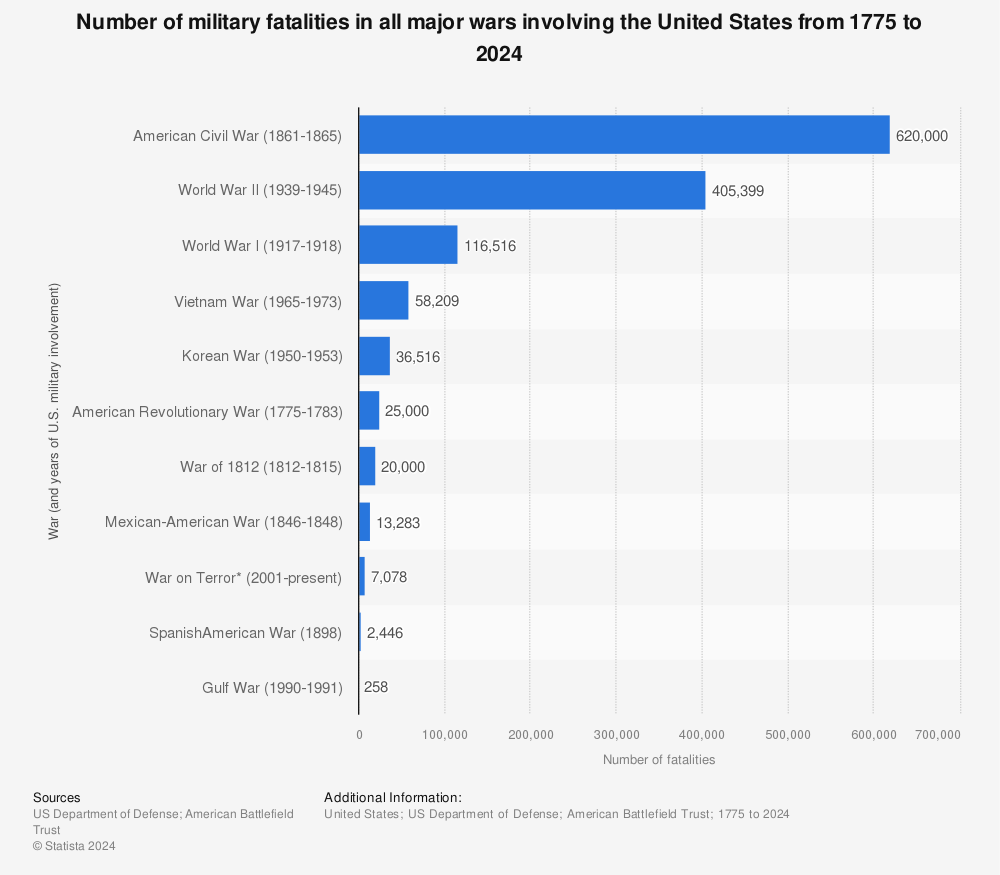
Find more statistics at Statista
Soon after the new administration arrived, things began to go missing from the White House website.
They weren’t just the partisan policy platforms that typically disappear during a presidential transition. Informational pages about the Constitution and past presidents, up in various forms since President George W. Bush was in office, all vanished.
Thousands of other government web pages had also been taken down or modified, including content about vaccines, hate crimes, low-income children, opioid addiction and veterans, before a court order temporarily blocked part of the sweeping erasure. A Justice Department database tracking criminal charges and convictions linked to the Jan. 6, 2021, attack on the Capitol was removed. Segments of data sets are gone, some of the experts who produced them were dismissed, and many mentions of words like “Black,” “women” and “discrimination” have evaporated.
For years, a National Park Service webpage introduced the Underground Railroad with a large photograph of its most famous “conductor,” Harriet Tubman. “The Underground Railroad — the resistance to enslavement through escape and flight, through the end of the Civil War — refers to the efforts of enslaved African Americans to gain their freedom by escaping bondage,” the page began.
Tubman’s photograph is now gone. In its place are images of Postal Service stamps that highlight “Black/White cooperation” in the secret network and that feature Tubman among abolitionists of both races.
The introductory sentence is gone, too. It has been replaced by a line that makes no mention of slavery and that describes the Underground Railroad as “one of the most significant expressions of the American civil rights movement.” The effort “bridged the divides of race,” the page now says.
The executive order that President Donald Trump issued late last month directing the Smithsonian Institution to eliminate “divisive narratives” stirred fears that the president aimed to whitewash the stories the nation tells about itself. But a Washington Post review of websites operated by the National Park Service — among the key agencies charged with the preservation of American history — found that edits on dozens of pages since Trump’s inauguration have already softened descriptions of some of the most shameful moments of the nation’s past.
Some were edited to remove references to slavery. On other pages, statements on the historic struggle of Black Americans for their rights were cut or softened, as were references to present-day echoes of racial division. The Post compared webpages as of late March to earlier versions preserved online by the Internet Archive’s Wayback Machine.


Many posts have dealt with racial issues.
Gen Robert E Lee is long dead, but the spirit of the Confederacy appears alive and well. Federal contractors will no longer be explicitly barred from racially segregating their restaurants, waiting rooms and water fountains, according to the Trump administration. A memorandum dated 15 February 2025, issued by the General Services Administration, the procurement arm of the federal government, explicitly dropped those strictures.
“Any open solicitations that contain any of the provisions or clauses listed above should be amended to remove the provisions and clauses,” the memo read. Forget about simply putting an end to race-based affirmative action and DEI. Team Trump appears determined to turn the clock back to the 1950s, if not earlier than that. The ghost of Jim Crow smiles.
President Trump has signed an executive order attempting to end birthright citizenship in the U.S. — a right guaranteed by the U.S. Constitution and affirmed by the Supreme Court more than 125 years ago.
Why it matters: Trump is acting on a once-fringe belief that U.S.-born children of undocumented immigrants have no right to U.S. citizenship and are part of a conspiracy (rooted in racism) to replace white Americans.
The big picture: A coalition of civil rights and civil liberties groups filed a lawsuit on Monday night in an effort to halt the executive order.The order is also expected to face legal challenges from state attorneys general since it conflicts with decades of Supreme Court precedent and the 14th Amendment — with the AGs of California and New York among those indicating they would do so.
Context: Ratified in 1868, the 14th Amendment was passed to give nearly emancipated and formerly enslaved Black Americans U.S. citizenship."All persons born or naturalized in the United States, and subject to the jurisdiction thereof, are citizens of the United States and of the State wherein they reside," it reads.
Zoom in: Trump signed the order on Monday, just hours after taking office.
Reality check: Thanks to the landmark Wong Kim Ark case, the U.S. has since 1898 recognized that anyone born on United States soil is a citizen.The case established the Birthright Citizenship clause and led to the dramatic demographic transformation of the U.S.
The Founding generation believed that oaths have consequences, binding those who took them to a course of action. And so, in the summer of 1787 delegates to the Constitutional Convention knew from the outset that whatever they came up with would include oaths. The famous “Virginia Plan,” a 19-point checklist offered up as a starting point for debate, proposed that all governmental powers within the states “be bound by Oath, to support the articles of Union.”
The final text mentions oaths three times. The Bill of Rights would add one more mention, the 14th Amendment yet another. Article VI of the Constitution empowers Congress to draft an oath for every single officeholder in the nation — federal, state and local — which they did immediately. The first thing signed into law by Washington was the Oaths Act. Every elected or appointed government official in a state or federal role would henceforth “solemnly swear or affirm (as the case may be) that I will support the Constitution of the United States.”
That oath was hugely important. Though it was rewritten by Congress in the wake of the Civil War, as Americans grappled with allowing former Confederates into federal service at all, that oath of office is still with us, for public servants low and high. I took it when I began work at the Library of Congress, incoming Vice President JD Vance will, too, and millions more have spoken the same words.
But only the president takes an oath written into the Constitution. A first draft had the incoming president swear simply to “faithfully execute the office of President of the United States of America.” The last two words disappeared as the oath took shape, with James Madison and George Mason adding “and will to the best of my judgment and power, preserve, protect and defend the Constitution of the United States.”
It sat that way until the closing days of the Convention. Washington’s copy, marked up as it received its final changes, shows him scratching out the words “judgment and power” and writing in the word “Abilities” (the final version actually used the word “ability”), a change the delegates must have made for concision, and the text was complete. He would be the first to speak those words.
The work Walters does would be admirable no matter how well he did it, but, as it turns out, he and his colleagues do their work better than any other organization in the country. Not just better than other cemeteries and funeral homes — better than any other organization, period. Seven consecutive times, the NCA has received the highest rating of any entity, public or private, in the American Customer Satisfaction Index. Developed at the University of Michigan’s Ross School of Business, the ACSI has been the gold standard for measuring consumer experiences for the past 30 years; its satisfaction scores range from zero to 100, with Costco pulling a whopping 85, Apple a respectable 83, McDonald’s a middling 71 and Facebook an underwhelming 69. The average ACSI score for federal agencies is 68, but the NCA most recently scored a 97 — the highest rating in the survey’s history, except for the last time the NCA participated, when it also scored 97.
...
Color guards, taps, marble headstones, military escorts, flags draped over coffins: So many of the traditions we associate with burying fallen heroes were standardized in the aftermath of the Civil War, when more than a half-million Americans had been killed and their loved ones struggled to make sense of their grief. Few people remember today that the occasion for Lincoln’s Gettysburg Address was the consecration of the national cemetery at that battlefield, where some 3,000 men were respectfully laid to rest and the president declared: “The world will little note, nor long remember what we say here, but it can never forget what they did here. It is for us the living, rather, to be dedicated here to the unfinished work which they who fought here have thus far so nobly advanced.”
The national cemeteries were part of an effort to unite the living in the pursuit of a lasting peace, creating a space where the soldiers whose lives had been sacrificed for the preservation of the Union could be glorified — to honor their memory, and also to ensure that no American would forget the wages of war. It was the first time in history that a country had gathered its war dead this way for reburial, a practice the United States continued throughout its foreign conflicts. The largest repatriation effort came after World War II, when President Harry S. Truman promised next of kin that they would get to decide where their loved ones would be buried, no matter how difficult it was to identify them, no matter how far from home they died. Well more than half the men who perished fighting alongside Staff Sgt. Ferris — more than 170,000 veterans — were returned to the United States for interment after the armistice. The effort to bring the others home has never ended.
ABERDEEN PROVING GROUND, Md. — Juneteenth is known as America’s “second” Independence Day because it commemorates the end of slavery in America. The holiday also represents the beginning of the fulfillment of America’s promise of life, liberty, and the pursuit of happiness for Black Americans.
President Abraham Lincoln issued The Emancipation Proclamation on Jan. 1, 1863, declaring “that all persons held as slaves” within the rebellious states “are, and henceforward shall be free.” However, Texas resisted the Emancipation Proclamation for more than two years.
On June 19, 1865, U.S. Army Maj. Gen. Gordon Granger arrived in Galveston, Texas, to enforce the Emancipation Proclamation and free the last enslaved Americans in Texas from bondage. This day became known as “Juneteenth”, or “Jubilee Day,” “Freedom Day,” or “Emancipation Day.”
Juneteenth is considered the longest-running Black American holiday. Over the years and through successive waves of migration, Juneteenth celebrations spread to the rest of Texas and eventually the country at large.
The Juneteenth Day of Observance officially became the 11th federal holiday in 2021 and is the first new federal holiday since the recognition of Rev. Dr. Martin Luther King Jr.’s birthday in 1983.
“Juneteenth represents not only the commemoration of the end of slavery in America more than 150 years ago, but the ongoing work to bring true equity and racial justice into American society,” said U.S. President Joseph R. Biden before the signing of the Juneteenth National Independence Day Act on June 17, 2021.
APG Soldiers, civilians advocate for equality in Harford County
Juneteenth is an integral part of Army life. It is a time to reflect on the crucial role the Army played in the Emancipation Proclamation and ending segregation in the U.S.
On July 26, 1948, President Harry Truman signed Executive Order 9981, which ended segregation in the military. This order marked a significant moment in the civil rights movement. It was also one of the first instances where a U.S. president used an executive order to implement a civil rights policy.
Locally, APG Soldiers and civilians were instrumental in the desegregation of Harford County by leading efforts to desegregate local restaurants, facilitate school integration, and advocate for fair and open housing in the 1960s, said Patricia D. Cole, President of the Havre de Grace Colored School Museum and Cultural Center, Inc.
These efforts included peaceful protests, speeches, and involvement in lawsuits. For example, Cole said many Soldiers and civilians were involved in the Route 40 protests, advocating for the desegregation of restaurants and other public accommodations.
In the 1960s, George S. Pettit, an APG scientist, filed a lawsuit to enable his son A. Dwight Pettit to attend Aberdeen High School. After a two-year legal battle, the Pettit family won the lawsuit, allowing A. Dwight Pettit to attend Aberdeen High School instead of Havre de Grace Consolidated, a segregated school for Black students. Today, A. Dwight Pettit is a prominent Baltimore lawyer.
Cole said in 1961, APG leaders facilitated meetings between local restaurant owners and civil rights leaders to advocate for removing racial exclusions in restaurants along Route 40.
“This effort was crucial as Black Vietnam veterans returning home faced significant challenges in finding housing off the post,” Cole said.
This Juneteenth, take time to reflect on what it means to be free, celebrate the resiliency of Black Americans, and honor those who fought and sacrificed to ensure the Constitution fulfilled its promise to all Americans.
Contestation over the structure and location of final sovereign authority—the right to make and enforce binding rules—occupies a central role in political development. Historically, war often settled these debates and institutionalized the victor’s vision of sovereignty. Yet sovereign authority requires more than institutions; it ultimately rests on the recognition of the governed. How does war shape imagined sovereignty? We explore the effect of warfare in the United States, where the debate over two competing visions of sovereignty erupted into the American Civil War. We exploit the grammatical shift in the “United States” from a plural to a singular noun as a measure of imagined sovereignty, drawing upon two large textual corpuses: newspapers (1800–99) and congressional speeches (1851–99). We demonstrate that war shapes imagined sovereignty, but for the North only. Our results further suggest that Northern Republicans played an important role as ideational entrepreneurs in bringing about this shift.
From the article:
Our measurement strategy leverages a grammatical change in the civic language in which the term “United States” shifted from a plural to a singular noun. Whereas at the beginning of the nineteenth-century Americans said “the United States are,” by the end of the century they were much more likely to say “the United States is.” We treat plural/singular usage as a proxy for the popular imagination of sovereignty. Specifically, we take plural usage as indicating that Americans view the United States as having multiple sovereignties embodied in the several states, and singular usage as indicating that Americans conceive of the United States as possessing a single national sovereignty.
We are not the first scholars to attribute such meaning to the usage of the plural and singular forms of the United States. For example, Civil War historian Shelby Foote linked sovereignty and speech in his observation that “Before the war, it was said ‘the United States are.’ Grammatically, it was spoken that way and thought of as a collection of independent states” (quoted in Ward1990, 273). Similarly, McPherson notes that the Civil War “marked a transition of the United States to a singular noun” and that “the ‘Union’ also became the nation” (McPherson1988, 859).
Many posts have discussed the background of Thanksgiving and other holidays.
Transcript for President Abraham Lincoln’s Thanksgiving Proclamation from October 3, 1863
The year that is drawing toward its close has been filled with the blessings of fruitful fields and healthful skies. To these bounties, which are so constantly enjoyed that we are prone to forget the source from which they come, others have been added, which are of so extraordinary a nature that they cannot fail to penetrate and even soften the heart which is habitually insensible to the ever-watchful providence of Almighty God.
In the midst of a civil war of unequaled magnitude and severity, which has sometimes seemed to foreign states to invite and provoke their aggressions, peace has been preserved with all nations, order has been maintained, the laws have been respected and obeyed, and harmony has prevailed everywhere, except in the theater of military conflict; while that theater has been greatly contracted by the advancing armies and navies of the Union.
Needful diversions of wealth and of strength from the fields of peaceful industry to the national defense have not arrested the plow, the shuttle, or the ship; the ax has enlarged the borders of our settlements, and the mines, as well of iron and coal as of the precious metals, have yielded even more abundantly than heretofore. Population has steadily increased, notwithstanding the waste that has been made in the camp, the siege, and the battlefield, and the country, rejoicing in the consciousness of augmented strength and vigor, is permitted to expect continuance of years with large increase of freedom.
No human counsel hath devised, nor hath any mortal hand worked out these great things. Theyare the gracious gifts of the Most High God, who while dealing with us in anger for our sins, hath nevertheless remembered mercy.
It has seemed to me fit and proper that they should be solemnly, reverently, and gratefully acknowledged as with one heart and one voice by the whole American people. I do, therefore, invite my fellow-citizens in every part of the United States, and also those who are at sea and those who are sojourning in foreign lands, to set apart and observe the last Thursday of November next as a Day of Thanksgiving and Praise to our beneficent Father who dwelleth in the heavens. And I recommend to them that, while offering up the ascriptions justly due to Him for such singular deliverances and blessings, they do also, with humble penitence for our national perverseness and disobedience, commend to His tender care all those who have become widows, orphans, mourners, or sufferers in the lamentable civil strife in which we are unavoidably engaged, and fervently implore the interposition of the Almighty hand to heal the wounds of the nation, and to restore it, as soon as may be consistent with the Divine purposes, to the full enjoyment of peace, harmony, tranquility, and union.
In testimony whereof, I have hereunto set my hand and caused the seal of the United Stated States to be affixed.
Done at the city of Washington, this third day of October, in the year of our Lord one thousand eight hundred and sixty-three, and of the Independence of the United States the eighty-eighth.
Abraham Lincoln
By the President: William H. Seward. Secretary of State
On June 19, 1865, two and a half years after President Abraham Lincoln’s historic Emancipation Proclamation, U.S. Maj. Gen. Gordon Granger issued General Order No. 3, which informed the people of Texas that all enslaved people were now free. Granger commanded the Headquarters District of Texas, and his troops had arrived in Galveston the previous day.
This day has come to be known as Juneteenth, a combination of June and 19th. It is also called Freedom Day or Emancipation Day, and it is the oldest known celebration commemorating the end of slavery in the United States.
The official handwritten record of General Order No. 3, is preserved at the National Archives Building in Washington, DC.
“The National Archives safeguards many of the nation's most important records related to African American history and civil rights, and General Order Number 3 is one of those records,” said Archivist of the United States David S. Ferriero. "We know from history that certain events took place, and it's always a delight when we can help make history come alive by sharing the actual documentation of those events.”
General Order No. 3 states:
“The people of Texas are informed that, in accordance with a proclamation from the Executive of the United States, all slaves are free. This involves an absolute equality of personal rights and rights of property between former masters and slaves, and the connection heretofore existing between them becomes that between employer and hired labor. The freedmen are advised to remain quietly at their present homes and work for wages. They are informed that they will not be allowed to collect at military posts and that they will not be supported in idleness either there or elsewhere.”
While the order was critical to expanding freedom to enslaved people, the racist language used in the last sentences foreshadowed that the fight for equal rights would continue. Visit our exhibit The Enduring Chronicle: Civil Rights Documents at the National Archives at Atlanta to review the “Early Gains and Losses” in the ongoing fight for Civil Rights.
Fort Bragg, one of the largest military bases in the United States, has officially been renamed Fort Liberty, following a ceremony Friday. The North Carolina post’s new name is part of a congressionally mandated plan to rename military bases, ships and streets that previously honored Confederate leaders.
The plan is the culmination of a years-long effort that intensified in 2020, after the murder of George Floyd and the reckoning it brought over the nation’s history of racism. A panel established by Congress recommended the Army rename nine installations that honored Confederate military officers.
“Welcome to Fort Liberty, the center of the universe,” Lt. Gen. Christopher Donahue, the commanding general of the XVIII Airborne Corps and the newly christened Fort Liberty, said during the ceremony Friday. “We were given a mission to re-designate our installation, no small task with its history. We seized this opportunity to make ourselves better and to seek excellence. That is what we always have done and always will do.”
The other eight Army bases selected to be renamed are Fort Benning and Fort Gordon in Georgia; Fort A.P. Hill, Fort Lee and Fort Pickett in Virginia; Fort Polk in Louisiana; Fort Rucker in Alabama; and Fort Hood in Texas.
The nine Army posts were all built during the first half of the 20th century in former Confederate states. Fort Bragg had been named in honor of Braxton Bragg, a Confederate general who was relieved of command after losing the battle for Chattanooga in 1863, though he remained active in the rebel cause, serving as an adviser to Confederate President Jefferson Davis.
Workers in Richmond, Virginia removed the last city-owned Confederate statue from its pedestal on Monday morning.
Why it matters: The moment marks the close of a two-year effort to remove memorials to the Confederacy in its former capital. City and state leaders had long resisted calls to take down Confederate iconography.
What’s happening: A crane lifted a statue of Confederate Gen. A.P. Hill from the center of a busy intersection just before 10am.
Context: While most city-owned Confederate memorials came down in the summer of 2020 amid widespread protests against police misconduct, Hill’s removal was delayed because his body is buried beneath the statue.
What they’re saying: “This is, I would say, the last day of the Lost Cause,” Mayor Levar Stoney said as workers loaded the statue onto a flatbed trailer.
In her statement Thursday night, Liz Cheney mentioned that, before 2020, presidents had always been willing to accept electoral defeat. She cited the example of Lincoln.
Abraham Lincoln, Memorandum on Probable Failure of Re-Election1, August 23, 1864
1 A summer of costly military stalemate and widespread disaffection among War Democrats and conservative Republicans with the administration's policies toward slavery persuaded Lincoln that he would probably be defeated in the 1864 presidential election. Perhaps to bear witness to his determination to save the Union even if defeated, he wrote out this memorandum, indicating his fear that General McClellan, if elected, would be forced by members of his party to seek an armistice with the Confederacy. Such an armistice could be tantamount to recognition of Confederate independence. Lincoln's memorandum, which he asked the members of his cabinet to sign as witnesses without reading, amounts to a pledge to work in concert with McClellan before the latter's inauguration.
Executive Mansion
Washington, Aug 23, 1864.
This morning, as for some days past, it seems exceedingly probable that this Administration will not be re-elected. Then it will be my duty to so co-operate with the President elect, as to save the Union between the election and the inauguration; as he will have secured his election on such ground that he can not possibly save it afterwards.
A. Lincoln
[Endorsed on Reverse:]
August 23. 1864.2
2 The date is in Lincoln's hand.
From the founding of the United States until long after the Civil War, hundreds of the elected leaders writing the nation’s laws were current or former slaveowners.
More than 1,700 people who served in the U.S. Congress in the 18th, 19th and even 20th centuries owned human beings at some point in their lives, according to a Washington Post investigation of censuses and other historical records.
The country is still grappling with the legacy of their embrace of slavery. The link between race and political power in early America echoes in complicated ways, from the racial inequities that persist to this day to the polarizing fights over voting rights and the way history is taught in schools.
The Washington Post created a database that shows enslavers in Congress represented 37 states, including not just the South but every state in New England, much of the Midwest, and many Western states.
Hundreds of public monuments have come down amid the racial reckoning sparked by the murder of George Floyd last year. Some were toppled by protesters armed with rope; others have been disassembled and carted away by professionals hired by local governments.
These removals may seem, well, monumental. But according to a study of U.S. public monuments, they’re a drop in the bucket, representing a mere 0.6 percent of the country’s nearly 50,000 monuments — monuments to historical figures who skew overwhelmingly White and male, including people who enslaved others, fought for the Confederacy, or never even set foot on American soil.
So who has been commemorated most often in stone, metal or wood? Unsurprisingly, Abraham Lincoln tops the list of historical figures most frequently honored with a public monument (193), edging out George Washington (171), according to the “National Monument Audit” by the nonprofit Monument Lab.
Christopher Columbus — who never visited mainland North America — comes in third, followed by the Rev. Martin Luther King Jr. At No. 5 is Saint Francis of Assisi, who also never contributed directly to American history, given that he died in Italy in 1226.
Of the 50 historical figures most frequently honored with a monument, only three were women: Joan of Arc, Sacagawea and Harriet Tubman. Tubman, the only one of the three who would have called herself American, was born enslaved and was not considered a citizen until she was in her 40s.
Of the men on the top 50 list, more than half were enslavers. Twelve were generals, 11 presidents and four Catholic saints or missionaries. Four were leaders of the Confederacy. Three men in the top 50 are men of color: King, Tecumseh and Frederick Douglass.
On June 19, 1865 — nearly nine decades after our Nation’s founding, and more than 2 years after President Lincoln signed the Emancipation Proclamation — enslaved Americans in Galveston, Texas, finally received word that they were free from bondage. As those who were formerly enslaved were recognized for the first time as citizens, Black Americans came to commemorate Juneteenth with celebrations across the country, building new lives and a new tradition that we honor today. In its celebration of freedom, Juneteenth is a day that should be recognized by all Americans. And that is why I am proud to have consecrated Juneteenth as our newest national holiday.
Juneteenth is a day of profound weight and power.
A day in which we remember the moral stain and terrible toll of slavery on our country –- what I’ve long called America’s original sin. A long legacy of systemic racism, inequality, and inhumanity.
But it is a day that also reminds us of our incredible capacity to heal, hope, and emerge from our darkest moments with purpose and resolve.
As I said on the 100th Anniversary of the Tulsa Race Massacre, great nations don’t ignore the most painful chapters of their past. Great nations confront them. We come to terms with them.
On Juneteenth, we recommit ourselves to the work of equity, equality, and justice. And, we celebrate the centuries of struggle, courage, and hope that have brought us to this time of progress and possibility. That work has been led throughout our history by abolitionists and educators, civil rights advocates and lawyers, courageous activists and trade unionists, public officials, and everyday Americans who have helped make real the ideals of our founding documents for all.
There is still more work to do. As we emerge from the long, dark winter of the COVID-19 pandemic, for example, racial equity remains at the heart of our efforts to vaccinate the Nation and beat the virus. We must recognize that Black Americans, among other people of color, have shouldered a disproportionate burden of loss — while also carrying us through disproportionately as essential workers and health care providers on the front lines of the crisis.
Psalm 30 proclaims that “weeping may endure for a night, but joy cometh in the morning.” Juneteenth marks both the long, hard night of slavery and discrimination, and the promise of a brighter morning to come. My Administration is committed to building an economy — and a Nation — that brings everyone along, and finally delivers our Nation’s founding promise to Black Americans. Together, we will lay the roots of real and lasting justice, so that we can become the extraordinary country that was promised to all Americans.
Juneteenth not only commemorates the past. It calls us to action today.
NOW, THEREFORE, I, JOSEPH R. BIDEN JR., President of the United States of America, by virtue of the authority vested in me by the Constitution and the laws of the United States, do hereby proclaim June 19, 2021, as Juneteenth Day of Observance. I call upon the people of the United States to acknowledge and celebrate the end of the Civil War and the emancipation of Black Americans, and commit together to eradicate systemic racism that still undermines our founding ideals and collective prosperity.
IN WITNESS WHEREOF, I have hereunto set my hand this eighteenth day of June, in the year of our Lord two thousand twenty-one, and of the Independence of the United States of America the two hundred and forty-fifth.
JOSEPH R. BIDEN JR.
Friends and Fellow Citizens:
Tarry here for a moment. My words shall be few and simple. The solemn rites of this hour and place call for no lengthened speech. There is, in the very air of this resting-ground of the unknown dead a silent, subtle and all-pervading eloquence, far more touching, impressive, and thrilling than living lips have ever uttered. Into the measureless depths of every loyal soul it is now whispering lessons of all that is precious, priceless, holiest, and most enduring in human existence.
Dark and sad will be the hour to this nation when it forgets to pay grateful homage to its greatest benefactors. The offering we bring to-day is due alike to the patriot soldiers dead and their noble comrades who still live; for, whether living or dead, whether in time or eternity, the loyal soldiers who imperiled all for country and freedom are one and inseparable.
Those unknown heroes whose whitened bones have been piously gathered here, and whose green graves we now strew with sweet and beautiful flowers, choice emblems alike of pure hearts and brave spirits, reached, in their glorious career that last highest point of nobleness beyond which human power cannot go. They died for their country.
No loftier tribute can be paid to the most illustrious of all the benefactors of mankind than we pay to these unrecognized soldiers when we write above their graves this shining epitaph.
When the dark and vengeful spirit of slavery, always ambitious, preferring to rule in hell than to serve in heaven, fired the Southern heart and stirred all the malign elements of discord, when our great Republic, the hope of freedom and self-government throughout the world, had reached the point of supreme peril, when the Union of these states was torn and rent asunder at the center, and the armies of a gigantic rebellion came forth with broad blades and bloody hands to destroy the very foundations of American society, the unknown braves who flung themselves into the yawning chasm, where cannon roared and bullets whistled, fought and fell. They died for their country.
We are sometimes asked, in the name of patriotism, to forget the merits of this fearful struggle, and to remember with equal admiration those who struck at the nation's life and those who struck to save it, those who fought for slavery and those who fought for liberty and justice.
I am no minister of malice. I would not strike the fallen. I would not repel the repentant; but may my "right hand forget her cunning and my tongue cleave to the roof of my mouth," if I forget the difference between the parties to hat terrible, protracted, and bloody conflict.
If we ought to forget a war which has filled our land with widows and orphans; which has made stumps of men of the very flower of our youth; which has sent them on the journey of life armless, legless, maimed and mutilated; which has piled up a debt heavier than a mountain of gold, swept uncounted thousands of men into bloody graves and planted agony at a million hearthstones -- I say, if this war is to be forgotten, I ask, in the name of all things sacred, what shall men remember?
The essence and significance of our devotions here to-day are not to be found in the fact that the men whose remains fill these graves were brave in battle. If we met simply to show our sense of bravery, we should find enough on both sides to kindle admiration. In the raging storm of fire and blood, in the fierce torrent of shot and shell, of sword and bayonet, whether on foot or on horse, unflinching courage marked the rebel not less than the loyal soldier.
But we are not here to applaud manly courage, save as it has been displayed in a noble cause. We must never forget that victory to the rebellion meant death to the republic. We must never forget that the loyal soldiers who rest beneath this sod flung themselves between the nation and the nation's destroyers. If today we have a country not boiling in an agony of blood, like France, if now we have a united country, no longer cursed by the hell-black system of human bondage, if the American name is no longer a by-word and a hissing to a mocking earth, if the star-spangled banner floats only over free American citizens in every quarter of the land, and our country has before it a long and glorious career of justice, liberty, and civilization, we are indebted to the unselfish devotion of the noble army who rest in these honored graves all around us.
Theresa Waldrop and Jamiel Lynch, at CNN:
A new exhibit that seeks to explain "the whole story" of the nation's largest Confederate monument, including the history of the Ku Klux Klan there, is coming to Georgia's Stone Mountain Park, the park's board said Monday.
The exhibit will be developed together with "credible and well-established historians," the board said in a news release, "to tell the warts and all history of the Stone Mountain carving," including the 1915 rebirth of the Ku Klux Klan on the mountain "and the 50-years of Klan rallies which followed," until the state bought the mountain and land around it in 1958.
The carving depicts three Confederate leaders of the Civil War on horseback: Jefferson Davis, president of the Confederacy during the Civil War, and Gens. Robert E. Lee and Thomas "Stonewall" Jackson. The figures are 90 feet by 190 feet on a carved oval background that is three acres -- larger than a football field, according to the association.
The monument has long been a flashpoint of debate between those who see it as part of the South's heritage and those for whom it represents White supremacy. It cannot be removed under Georgia law.

Timothy Pratt and Rick Rojas at NYT:
The idea for the sculpture — one of the largest bas-relief carvings in the world — emerged in 1914, portrayed as a massive memorial to the Lost Cause, or the notion that the South was defending more than just slavery in the Civil War.
The effort took decades to complete. It stalled during the Great Depression but picked up new momentum in 1954 as Marvin Griffin, a candidate for governor riding the outcry following the Brown v. Board of Education ruling, promised to uphold segregation and finish the monument. (The park is owned by the state.)
Critics and historians said that racist anger, more than heartache over Confederate bloodshed, fueled the monument’s creation. “They have the wrong people on the mountain,” Mr. Hale said, suggesting that it might have been more accurate to depict segregationist politicians instead of Confederate leaders. “This mountain is about massive resistance to desegregation. It’s not about the Civil War.”
A song alluding to Abraham Lincoln as a "tyrant" and a "despot" and to the Union as "Northern scum!" is no longer Maryland's official anthem after Gov. Larry Hogan this week approved its repeal — a move that some Republicans say is another example of "cancel culture."
Hogan gave the measure his OK months after the state's legislature voted to eliminate the long-controversial Civil War-era song, Maryland, My Maryland.
"We're repealing the state song. It is a relic of the Confederacy, which is clearly outdated and out of touch," Hogan, a Republican, said when he signed the measure on Tuesday.
Maryland, My Maryland, sung to the tune of O Tannenbaum, is based on a poem written in 1861 inspired by the Pratt Street Riot on April 19 of that year. The riot saw Southern sympathizers attack the 6th Massachusetts Infantry as they marched through Baltimore on their way to Washington, D.C., days after the South Carolina militia fired the opening shots of the Civil War upon Fort Sumter.
In 1978, a bust of the slave trader, Confederate general and early Ku Klux Klan leader Nathan Bedford Forrest was installed in the Tennessee capitol building, immediately prompting protests.
Forty-three years later, the effort to remove the bust has some state Republicans grinding every bureaucratic lever at their disposal to a halt, the latest in a long line of fights on the general’s behalf. This week, several Republicans backed a bill to sack members of a historical commission that voted to remove the bust.
Larry McCluney, commander-in-chief of the Sons of Confederate Veterans, thinks the solution is simple: those offended by the Forrest’s likeness should simply look away.
“We’re dealing with a time period now where everybody is offended by something,” McCluney told TPM. “They talk about the issues of slavery, racism, white supremacy — well, you know, our nation has a history of that, and it’s been around a lot longer than people realize.”
Nowadays, it’s a bit more difficult for elected Republican politicians to stick up for Forrest, whose presence in the capitol is at the center of the fight over the legislation to replace the historical commission.
“I don’t know that it’s specifically related to the three statues that are up on the second floor, but that could be the motivation behind it,” Lt. Gov. Randy McNally (R) told reporters Thursday when asked about the bill.
“But overall, not looking at the motivation, I think it’s a good thing,” he added.
McNally and House Speaker Cameron Sexton (R) have written to the state’s attorney general, raising concerns that the commission didn’t follow the legal requirements for issuing its decision.
Justin Jones, a young activist who has pushed for years for the statue’s removal, said the vote to move the bust out of the Capitol felt like a victory. To Jones, the bust has a clear purpose.
“It’s meant to remind us that, even though they did remove those ‘colored’ and ‘white’ signs in the 1960s and 70s, they never replaced it with a ‘you’re welcome’ sign,” he said. “This symbol is a reminder that we’re not welcome there.”
Amid the images and videos that emerged from Wednesday’s rampage, the sight of a man casually carrying the Confederate battle flag outside the Senate floor was a piercing reminder of the persistence of white supremacism more than 150 years after the end of the Civil War.
Months after statues of Confederate leaders and racist figures were removed or torn down around the world, an unidentified man in bluejeans and a black sweatshirt carried the emblem of racism through the Ohio Clock corridor, past a portrait of Senator Charles Sumner of Massachusetts, an abolitionist.
The emblem has appeared in the Capitol before.
The Mississippi flag, which once featured the Confederate symbol prominently, hung in the Capitol until June 2020, when it was replaced after a vote by the State Legislature to remove the emblem.
But Wednesday was the first time that someone had managed to bring the flag into the building as an act of insurrection, according to historians.