The hollowing of civil society has threatened effective implementation of scientific solutions to pressing public challenges—which often depend on cultivating pro-social orientations commonly studied under the broad umbrella of social capital. Although robust research has studied the constituent components of social capital from the demand side (that is, the orientations people need for collective life in pluralistic societies, such as trust, cohesion and connectedness), the same precision has not been brought to the supply side. Here we define the concept of civic opportunity—opportunities people have to encounter civic experiences necessary for developing such orientations—and harness data science to map it across America. We demonstrate that civic opportunity is more highly correlated with pro-social outcomes such as mutual aid than other measures, but is unequally distributed, and its sources are underrepresented in the public dialogue. Our findings suggest greater attention to this fundamentally uneven landscape of civic opportunity.
Bessette/Pitney’s AMERICAN GOVERNMENT AND POLITICS: DELIBERATION, DEMOCRACY AND CITIZENSHIP reviews the idea of "deliberative democracy." Building on the book, this blog offers insights, analysis, and facts about recent events.
Search This Blog
Sunday, December 3, 2023
Civic Opportunity
Wednesday, October 11, 2023
Education and Overdose
Many posts have discussed iinequality and higher education.
David Powell, "Educational Attainment and US Drug Overdose Deaths"
JAMA Health Forum. 2023;4(10):e233274. doi:10.1001/jamahealthforum.2023.3274
Key Points
Question Was educational attainment associated with overdose death rate growth in the US from 2000 to 2021?
Findings In this cross-sectional study of 912 057 overdose deaths in the US from 2000 to 2021, overdose deaths increased sharply among individuals without any college education. The overdose death rate increased substantially between 2018 and 2021 for those without a high school diploma, primarily due to increases in deaths with synthetic opioid involvement.
Meaning In this study, educational attainment, an important component of socioeconomic status, was found to be associated with overdose deaths, especially during the COVID-19 pandemic.
Monday, October 9, 2023
The Two-Parent Edge
Many posts have discussed marriage and family.
- College graduation and economic success are more common for young adults from intact families.
- Children who have the benefit of two parents are comparatively more advantaged today than they were in previous decades.
- The relationship between family structure and college graduation is stronger today than it was for Boomers.
Thursday, October 5, 2023
Life Expectancy and Education
Anne Case and Angus Deaton:at Brookings:
The widening gap in death rates between Americans with and without a four-year college degree shows the U.S. economy is failing working class people, suggests a paper discussed at the Brookings Papers on Economic Activity (BPEA) conference on September 28.
The U.S. economy, as measured by conventional metrics such as growth in gross domestic product (GDP), has recently outperformed other advanced economies. But mortality data paint a different picture, according to “Accounting for the Widening Mortality Gap between American Adults with and without a BA.”
“GDP may be doing great, but people are dying in increasing numbers, especially less-educated people,” Anne Case, one of the authors, said in an interview with The Brookings Institution. “A lot of the increasing prosperity is going to the well-educated elites. It is not going to typical working people.”
She and co-author Angus Deaton, the winner of the 2015 Nobel Prize in economics, both of Princeton University, analyzed U.S. death certificate information, including the age of death, cause of death, and educational attainment. They found that life expectancy for the college educated in 2021 was eight-and-a-half years longer than for the two-thirds of American adults without a bachelor’s degree. That’s more than triple the 1992 gap of about two-and-a-half years.
...
Deaths of despair were the leading driver of the widening mortality gap over the past 30 years, but the gap also widened for most other major causes of death, the paper notes. Cancer mortality, for instance, has declined overall but it has declined more for people with college degrees.
The mortality gap widened explosively during the pandemic, according to the paper. Both COVID-19 deaths and deaths of despair were more common among people without college degrees, who were more likely to work in public-facing jobs, use public transportation, and live in crowded quarters.
“People with BAs have Zoom. People without BAs don’t have Zoom; they have to go to work,” Deaton said.
Thursday, August 10, 2023
Opioid Abuse and Deaths of Despir
National Institute on Drug Abuse:
In 2021, an estimated 2.5 million people aged 18 years or older in the U.S. had opioid use disorder in the past year, yet only 1 in 5 of them (22%) received medications to treat it, according to a new study Some groups were substantially less likely to receive medication for opioid use disorder, including Black adults, women, those who were unemployed, and those in nonmetropolitan areas.
Question Is the interaction between income inequality and social mobility associated with an increased risk of deaths of despair (deaths from suicide, drug overdose, and alcoholic liver disease) among the working-age population in the US?
Findings In this cross-sectional study, higher income inequality and lower social mobility were associated with a higher burden of deaths of despair for Black, Hispanic, and White populations. In addition, the joint exposure of unequal income distribution and lack of social mobility was associated with additional risks of deaths of despair on both the additive and multiplicative scales.
Meaning The findings of this study suggest that policy responses to the epidemic of deaths of despair must address the underlying social and economic conditions associated with these deaths.
Sunday, August 6, 2023
Progressivity
- The U.S. system of taxes and transfers is highly progressive.
- Measuring comprehensive income, inclusive of market-based income and government taxes and transfers, illustrates the total fiscal burden created by a fiscal system.
- Income transfer programs amplify the U.S. federal tax system’s progressivity, move the state and local system from moderate regressivity to moderate progressivity, and result in a highly progressive fiscal system overall.
- The lowest quintile experienced a combined tax and transfer rate of negative 127.0 percent, meaning that for each dollar they earned, they received an additional $1.27 from the government, netting transfers (gains) and taxes (losses), while the top quintile had a rate of positive 30.7 percent, meaning on net they paid just under $0.31 for every dollar earned.
- The top quintile funded 90.1 percent, or $1.6 trillion, of all government transfers in 2019. For each dollar of taxes paid, the top quintile received $0.11 in gross government transfers.
- Government transfers account for 59 percent of the bottom quintile’s comprehensive income. For each dollar of taxes paid by the bottom quintile, they received $6.17 in gross government transfers.
- Before transfers, total effective fiscal incidence rates were generally progressive: 24.6 percent for the bottom quintile, 24.7 percent for the middle quintile, and 34.5 percent for the top quintile.
- After transfers, total effective fiscal incidence rates were markedly progressive: 10.1 percent for the bottom quintile, 22.4 percent for the middle quintile, and 41.4 percent for the top quintile.
- Including transfers in income decreased the effective state and local fiscal incidence rate for the bottom quintile by more than 11 percentage points to 7.8 percent. The middle quintile saw a 1 percentage point decrease to 9.9 percent, while the top quintile saw an increase of 2 percentage points to 12.1 percent.
- About one-sixth of the tax burden borne by households in the lowest quintile is not personal taxes—like income, sales, and property taxes—but taxes remitted by businesses that are economically borne by taxpayers—like corporate income taxes, tariffs, severance taxes, and a variety of taxes on capital. Property taxes account for nearly one-third of the tax liability for this cohort, which includes both property taxes remitted directly by lower-income homeowners and those borne indirectly by renters.
Friday, August 4, 2023
First Gen
Many posts have discussed inequality in higher education.
Jessica Blake at Inside Higher Ed:
The debate over who qualifies as first generation is not new, and the definitions have long varied. But the Supreme Court’s recent ruling prohibiting affirmative action in college admissions has renewed those discussions. Higher ed administrators are now seeking alternative methods for enrolling diverse classes without running afoul of the law. First-generation students—many of whom are people of color—may be an answer....The term “first generation” was first codified in federal law in 1980 and was developed out of a desire to find a common eligibility criteria with a positive connotation for TRIO, federal support programs for students from disadvantaged backgrounds. The law deems students eligible if neither of their parents completed “a baccalaureate degree.” It also only considers the education status of the parent or parents with whom the student lived.
Thursday, July 27, 2023
Inequality in College Admissions
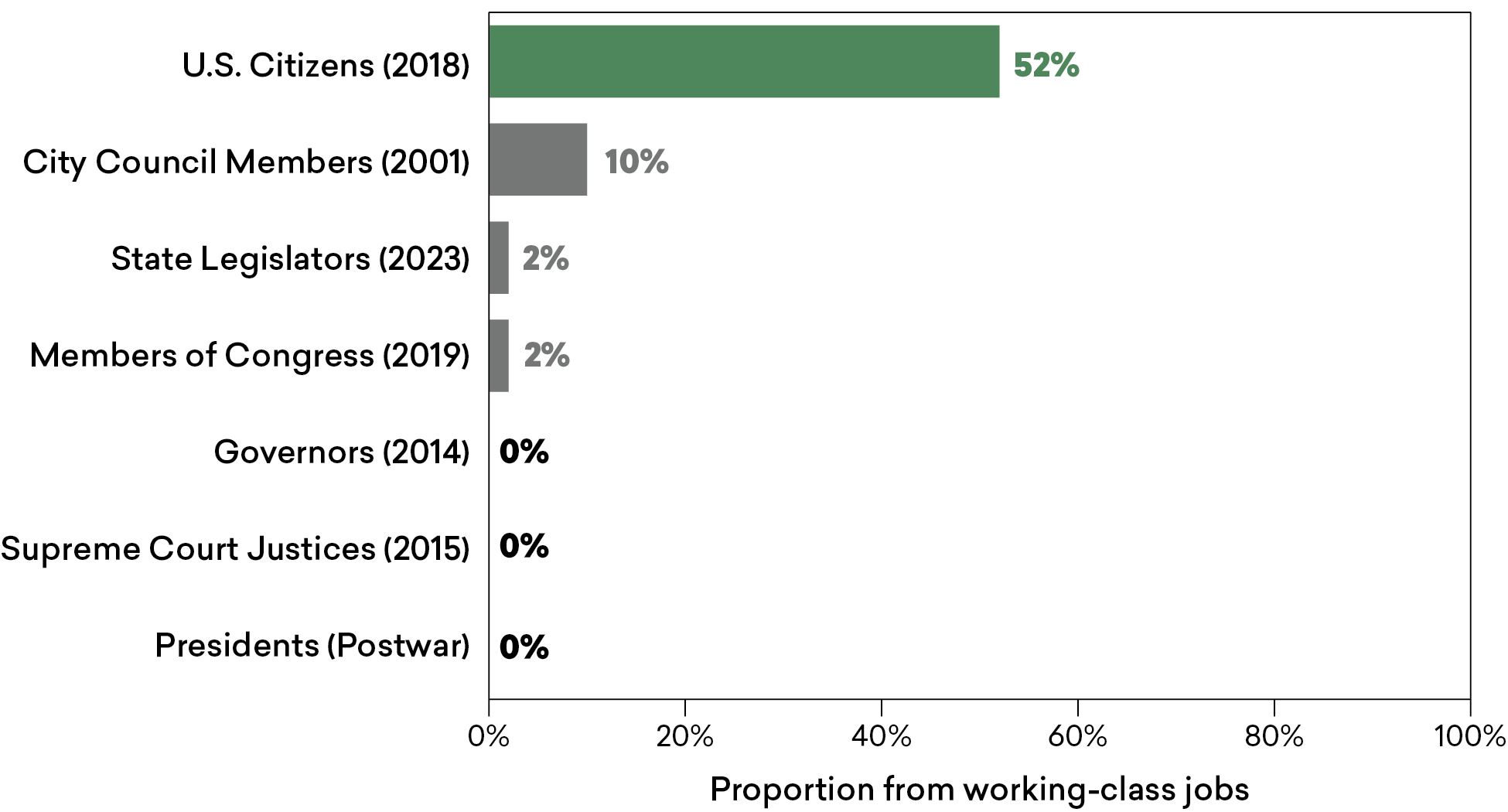
Leadership positions in the United States are held disproportionately by graduates of a group of 12 highly selective, private “Ivy-Plus” colleges—the eight colleges in the Ivy League, the University of Chicago, Duke, MIT, and Stanford. Less than one percent of Americans attend these 12 colleges, yet they account for 15% of those in the top 0.1% of the income distribution, a quarter of U.S. Senators, half of all Rhodes scholars, and three-fourths of Supreme Court justices appointed in the last half-century (Figure 1).
Furthermore, the students who attend Ivy-Plus institutions disproportionately come from high-income backgrounds themselves: just 10% of students scoring at the 99th percentile on the SAT/ACT from middle-class families attend an Ivy-Plus college, compared with 40% of similarly high-scoring students from families in the top 1 percent of the income distribution (Figure 2).
These two facts motivate our central question: Do highly selective colleges perpetuate privilege across generations and, conversely, could these colleges diversify America’s leaders by changing their admissions policies?
We answer this question using a “big data” approach—combining anonymized admissions data from several private and public colleges linked to parents’ and students’ income tax records and students’ SAT/ACT scores. We find that certain admissions practices at Ivy-Plus colleges—legacy preferences, weight placed on nonacademic factors, and athletic recruitment—give children from high-income families an advantage in admissions. Furthermore, being admitted to an Ivy-Plus college dramatically changes children’s life trajectories, giving them much greater chances of reaching positions of leadership. Together, these results imply that Ivy-Plus colleges could significantly increase the socioeconomic diversity of America’s leaders by changing their admissions practices.
KEY FINDINGS
• Ivy-Plus colleges are more than twice as likely to admit a student from a high-income family as compared to low- or middle-income families with comparable SAT/ACT scores.
• Higher admission rates for students from high-income families can be attributed to three factors: preferences for children of alumni (legacies), higher non-academic ratings, and athletic recruitment.
• The three factors underlying the high-income admissions advantage are not associated with better post-college outcomes; in contrast, SAT/ACT scores and academic ratings are highly predictive of post-college success.
• Attending an Ivy-Plus instead of a flagship public college triples students’ chances of obtaining jobs at prestigious firms and substantially increases their chances of earning in the top 1%.
• By changing their admissions policies, Ivy-Plus colleges could significantly diversify the socioeconomic backgrounds of America’s highest earners and leaders.
Tuesday, July 18, 2023
Race-Based and Legacy Admissions
In general, consideration of race and ethnicity is more common among schools with the lowest admission rates.
In the Center’s analysis of selective schools with publicly available CDS data, all 24 schools that admit fewer than 10% of applicants say they consider race and ethnicity when deciding whom to admit, although only one rated it as an important factor. And among the 48 schools that admit between 10% and 30% of applicants, all but seven consider race and ethnicity in admissions, with five rating it as an important factor.
But among the 51 schools that admit between 30% and half of all applicants, just over half (26, or 51%) consider race and ethnicity, and only four call it an important factor. Nearly half of those schools (25, or 49%) say they don’t consider race and ethnicity at all.
Among the colleges in our study group, the average admissions rate is lower among schools that consider race and ethnicity than among those that don’t (21.7% vs. 37.4%).
Also, consideration of race and ethnicity is more common for private colleges and universities, at least among the institutions we studied. All but 10 of the 92 private colleges and universities we examined (89%) considered race and ethnicity in deciding whom to admit, with 10 of those ranking it as an important factor.
But among the 31 public schools, only nine (29%) considered race and ethnicity at all, and none rated it as an important factor. (One partial explanation: Nine of the 22 public schools that don’t consider race and ethnicity in admissions are in California, where voters banned the practice in a 1996 ballot initiative.)
The Post reviewed the latest available answers for more than 140 prominent colleges and universities. Nearly all said course rigor and academic GPA were “important” or “very important.” Fewer than half put that much emphasis on test scores, with a majority stating instead that scores were “considered.”
More than 100 said race was considered or important — answers the court ruling will presumably change.
More than 100 also said they consider alumni-applicant relationships. Among them are Harvard University and the University of North Carolina at Chapel Hill, the schools that defended race-conscious admissions before the Supreme Court. Oberlin College in Ohio called alumni relationships important.
Monday, June 12, 2023
College Inequality
Nationally, just 34% of Americans ages 25 or older have a four-year college degree. The numbers are very uneven around the country. The range runs from 42% in the affluent, multicultural, professional Urban Suburbs to 16% in the young, rural, and low-income Native American Lands.
In College Town counties, 38% have college degrees, just above the national average. These 171 counties, often located in and around more rural, settled areas, present a good example of varying educational levels colliding. After all, many are not yet college graduates. Others hold master’s, professional, and/or doctoral degrees. Still others outside the college structure may not have nor be on track toward a bachelor’s degree. It’s not uncommon for town-gown relations to be strained, even contentious at times.
Meanwhile, in Rural Middle America and Aging Farmlands, comprising 896 counties in the Plains and the country’s upper tier, many have derided college and are pushing for a broader educational focus on the trades. In each county type, just over 20% have college degrees. While bachelor’s degree percentages are lowest in Native American Lands, bachelor’s figures are also low in young, rural, Hispanic Centers in the West, Southwest, and Florida; Working Class Country, lower-income communities in Appalachia; and Evangelical Hubs, lower-income communities in the South with high numbers of Evangelical adherents.
In 2020, Barabara Jacoby wrote at Inside Higher Ed:
The “new normal” we’re all talking about entails huge changes to residence halls and residential life. But, with or without COVID-19, the stark reality is that less than 15 percent of college students live on campuses. And their number is likely to shrink this fall as more students have to commute from home because of coronavirus-related family and financial issues or are forced into off-campus housing as a result of reducing dorm density.
Commuter students are defined as those who do not live in institution-owned housing on campuses. They make up more than 85 percent of today’s college students.
Their numbers include students of traditional age who live with their parents, those who live in rental housing near the campus, adults with full-time careers and parents living with their own children. Forty-one percent are 25 years of age or older, and 39 percent attend part-time. As many as 70 percent of full-time students work while enrolled in college, as do almost all part-time students. Those characteristics are more likely to apply to commuter students and, despite COVID-19’s disruptions, are also more likely to hold true in the upcoming academic year.
Sunday, April 30, 2023
Told They Can't
Narrated by, Xolo Maridueña (star in Cobra Kai, Netflix)
"Told They Can't" is the compelling story of high profile professionals of color from families and backgrounds society doesn't consider ideal. Their parents (if they had family support) didn’t have access to an education, most worked for low pay and had little or no hope for advancement in life.
Their classroom experiences were painful and offensive. They were overlooked, dismissed and marginalized. Unfairly placed in remedial classes, not considered for the advanced readers group, and presumed to be uninterested in college prep classes, yet not even asked.
At home, most faced extreme personal hardships including hunger, poverty, abuse and neglect. No one would ever have predicted each would become a successful professional. Today they are engineers, doctors, medical professors, educators, authors, research scientists and elected state and federal government leaders.
Each one of them deserves our deepest respect and fullest admiration. Their stories make it clear, since they overcame nearly impossible problems to be successful, we all can beat the issues facing us and be successful as well.
So, why were they told they can't? How did society get it so wrong? Their success stories shine a penetrating spotlight on how and why they were so badly misjudged. It's stark glare reveals a familiar false premise, one deeply believed by many in our society - only the ideal few, from a traditional, privileged background and family income level will/can be successful. This is pure myth, daily proven false many times over. Yet, this old fairy tale, when preferred, generates toxic negative stereotypes and prejudices, which foster irrational biases toward others.
The truth is every child (human), has unlimited potential, no matter background, ethnicity, or family income.
THE FILM'S HEROES
Lisa Ramirez, Ed.D - migrant child farm laborer; an author who earned a doctorate in education and served in leadership at the U.S. Department of Education.
Tony Cardenas - His immigrant parents had very little opportunity or education; yet their offspring, including Tony attended college. He became an engineer, community leader and was elected to and serves in the U.S. Congress
Anna M. Caballero - California State Senator, graduate of UCLA law school and UC San Diego. Born to a family of copper miners from Arizona. She has very real world advice for students and parents.
Esteban G. Burchard, MD, MPH - raised in the tough SF Mission Barrio; he studied at Stanford Medical School and Harvard, was a National Health Advisor to President Obama and now is a research scientist at UCSF
Katherine Flores, MD - grew up a migrant child farm laborer; attended college, became an MD, a medical professor and Director of the Latino Center for Medical Education and Research at UCSF Fresno
Fernando S. Mendoza, MD, MPH - son of an immigrant farm worker; he studied at Stanford and Harvard, became a pediatrician, professor of pediatrics and Associate Dean of Diversity at Stanford Medical School
Enrique Diaz - Enrique, when 2, came to the U.S. with his mother, both undocumented. By age 6 he was laboring in the fields, a migrant child farm worker. Enrique earned his computer engineering degree at Cal Poly San Luis Obispo where he was recruited and hired as a Research and Development Scientist for Apple in the Silicon Valley
Blanca E. Rubio - as an undocumented child, she was twice deported; today she is a U.S. citizen and elected leader in the California State Assembly
Raul Ruiz, MD, MPH, MPP - grew up a migrant child farm worker; attended Harvard, is an ER doctor and a leader in the U.S. Congress
Ramon Resa, MD – Abandoned age 2, grew up a migrant child farm laborer; earned a degree in medicine, became a pediatrician in the Central Valley to kids like he was. An author, and public speaker
THE FILM'S LESSONS
1. REFUSE to accept being told you can’t, even by those in authority. Rather aspire to become all you possibly can, no limits.
2. Acknowledge that every child has limitless human potential, no matter background, ethnicity, or family income.
3. All may overcome seemingly insurmountable problems and challenges, just as the individuals featured in this film have. If they could do it, so can each of us.
4. It's imperative to correct the flawed metrics society uses when forecasting which students have potential for success. Parents, school boards, administrators, teachers, and staff must adopt a more inclusive understanding and appreciation for the human potential of all – not only "ideal" candidates from privileged traditional backgrounds.
5. It's time for deep examination of what is valued and who is admired in our culture and why; move individuals like those featured in this film to the top of the list of heroes we respect, admire, and want to be like. Follow their example.
Every Child Has Limitless Human Potential
Saturday, April 15, 2023
Class Inversion and House Districts
Nine of the top 10 wealthiest congressional districts are represented by Democrats, while Republicans now represent most of the poorer half of the country, according to median income data provided by Rep. Marcy Kaptur's (D-Ohio) office.
Why it matters: The last several decades have ushered in a dramatic political realignment, as the GOP has broadened its appeal to a more diverse working class and Democrats have become the party of wealthier, more-educated voters.
By the numbers: 64% of congressional districts with median incomes below the national median are now represented by Republicans — a shift in historical party demographics, the data shows.
- "Republicans were the party of the country club, and they're increasingly the party of country," lobbyist and political analyst Bruce Mehlman told Axios.
- "We have seen an inversion of Democrat and Republican shares of the highest- and lowest-income districts — and the highest and lowest college degree-holding districts," Cook Political Report's Dave Wasserman told Axios.
Sunday, April 9, 2023
Social Security and Inequality
Gopi Shah Goda and Andrew Biggs at AEI:
Abstract:
- Almost one in every five Americans receives income support from Social Security.
- Social Security is financed on a pay-as-you-go basis, which means that today’s workers’ payroll taxes are used to pay benefits to today’s beneficiaries.
- Changes in population demographics, including longevity improvements, have resulted in a sharp decline in the number of workers per beneficiary, and this trend is projected to continue.
- As a result, Social Security is facing significant financial challenges and policymakers must take action to ensure its long-term sustainability
In 2015, Social Security represented 30 percent of income on average for individuals age 65 and over. Forty percent of all seniors in 2015 received 50 percent or more of their income from Social Security. Meanwhile, 14 percent of all seniors received 90 percent or more of their incomes from the program.1 Social Security is a critical source of income for those who are widowed and low-income retirees, and Social Security represents a larger share of retirement income for women than for men. Inequality in life expectancy has significant implications for the distributional consequences of Social Security. Lower-income individuals tend to have lower life expectancies than higher-income individuals, meaning that they may receive fewer years of Social Security benefits. This means that the increasing gap in life expectancy by income works against the progressivity in the benefit formula.2
1 Dushi, Irena, and Brad Trenkamp. “Improving the measurement of retirement income of the aged population.” Social Security Administration. ORES Working Paper No. 116 (January 2021).
2 See National Academies of Sciences, Engineering, and Medicine, and Committee on Population. “The growing gap in life expectancy by income:Implications for federal programs and policy responses.” National Academies Press, 2015.
Thursday, March 9, 2023
California Inequality
Income Inequality in California, by Tess Thorman, Daniel Payares-Montoya, and Joseph Herrera at PPIC
- The gap between high- and low-income families in California is among the largest in the nation—exceeding all but three other states in 2021 (the latest data available). Families at the top of the income distribution earned 11 times more than families at the bottom ($291,000 vs. $26,000 for the 90th and 10th percentiles, respectively). In 1980, families at the top earned 7 times more than those at the bottom, and the current gap reflects 63% income growth for the 90th percentile, and 7% growth for the 10th percentile over four decades.
- California’s income distribution reflects high rates of poverty. Income is frequently not enough to meet basic needs (on average a family of four requires about $37,000). Families in the bottom quarter of the income distribution are at risk of poverty absent major safety net programs.
- Wealth is more unevenly distributed than income. In California, 20% of all net worth is concentrated in the 30 wealthiest zip codes, home to just 2% of Californians.
- Californians are concerned. According to the PPIC Statewide Survey, 71% believe that the gap between rich and poor is increasing; a similar share think the government should do more to reduce that gap.
- Income inequality was shrinking in the years leading up to the pandemic, due to notable gains for the lowest-income families. Incomes for families at the 10th percentile increased by 23% between 2016 and 2019, compared to 5% for families at the 90th percentile.
- Between 2019 and 2021, top incomes grew consistently, by 6% for the 90th percentile. Middle incomes (50th percentile) faltered in 2020 but rebounded in 2021. Low incomes (10th percentile) fell 7%.
- These estimates describe pre-tax income and include a conservative estimate of unemployment (UI) benefits, without which low incomes would have been lower by at least 12% in 2020, and 5% in 2021. They also take a conservative approach with inflation, which may impact lower- and higher-income families differently and exacerbate inequality. For instance, from 2017–20, those in the bottom 20% spent 69% of all pre-tax income on food and transportation (including gasoline)—areas where prices have risen most—while those in the top 20% spent 14% of their income on those same categories.
- Shifts in technology and international trade have played key roles in reshaping jobs, creating advantages for college-degree holders. Among families in which any member holds a four-year degree or higher, median income has increased by 34% since 1980. Median income did not increase for families where no member holds a four-year degree.
- Families with college graduates earn $2.24 for every $1 that families without college graduates earn, as of 2021.
Sunday, February 19, 2023
Inequality in Silicon Valley
A new study of Silicon Valley wealth, income and other economic measures shows vast disparities in one of the country’s wealthiest regions, with the top 10% of households holding 66% of the investable assets in the region last year.
In Santa Clara and San Mateo counties, just eight households held more wealth than the bottom 50% (nearly half a million households), according to the Silicon Valley Index, an annual report by the Silicon Valley Institute for Regional Studies, the research arm of Joint Venture Silicon Valley.
...
Santa Clara and San Mateo counties had 163,000 millionaire households in 2022, which the report defined as households that had more than $1 million in investable assets. That translates to less than 1% of the region’s population holding about 36% of its wealth.
And an estimated 8,300 households held more than $10 million in investable assets, according to the report.
Conversely there were about 220,000 Silicon Valley households with fewer than $5,000 in total assets.
About 23% of Silicon Valley residents lived below the poverty threshold in 2021, a 3 percentage point increase from 2019. Two percent of Silicon Valley households, or about 22,000 households, did not hold bank accounts.
Sunday, February 12, 2023
Segregation in Kansas City
The Chiefs, who play the Philadelphia Eagles on Sunday in a Super Bowl featuring two Black starting quarterbacks for the first time, have a proud legacy of elevating Black talent. The franchise’s early teams were stocked with overlooked stars from historically Black colleges and universities. Lamar Hunt, the team’s owner, saw the NFL’s racial biases as a market inefficiency to exploit.
But the city wasn’t nearly as hospitable. Black players such as Garrett struggled to find housing in a metro area that was among the most redlined in the country.
No place epitomized segregation like the Country Club District. In the first half of the 20th century, developer J.C. Nichols built a wonderland of posh homes, tree-lined vistas and cul-de-sacs that spanned more than 5,000 acres, emanating from the middle of Kansas City, Mo., into Kansas, where he planned several more suburban communities. “If Webster was asked to provide another synonym for city planning,” wrote one New York City journalist in 1925, “his answer would be Jesse Clyde Nichols, Kansas City, Mo.”
Restrictive covenants were key to Nichols’s neighborhoods. He legally bound entire subdivisions to ban Black people from buying homes. To ensure no one broke the covenants, he created homeowners associations to enforce the rules. Nichols wasn’t the first person to use these innovations, but he was the first to apply them over such a large area in a systematic fashion, and he spread his techniques across the country as an influential member of various real estate trade groups.
The story of Nichols and Kansas City’s extreme segregation, exemplified by a de facto dividing line at Troost Avenue, have become an increasingly discussed subject among residents over the past decade. What is less known is how those policies were applied to Kansas City’s emblem of pioneering equality in the NFL: the Chiefs.
Friday, January 27, 2023
Religion and Deaths of Despair
Abstract:
In recent decades, death rates from poisonings, suicides, and alcoholic liver disease have dramatically increased in the United States. We show that these "deaths of despair" began to increase relative to trend in the early 1990s, that this increase was preceded by a decline in religious participation, and that both trends were driven by middle-aged white Americans. Using repeals of blue laws as a shock to religiosity, we confirm that religious practice has significant effects on these mortality rates. Our findings show that social factors such as organized religion can play an important role in understanding deaths of despair.
Friday, December 16, 2022
Religion and Class
It has long been presumed, and in some cases feared, that higher education—and the widespread availability of information and knowledge via the Internet—would undermine religious commitments. Actual evidence for this is lacking. While religious doubting has grown in recent years, the most educated Americans show up to services most often. Even as they report less certainty in their religious beliefs, they participate more regularly in worship services. Higher education appears to reinforce regular religious participation.
...
The simplest explanation is that college-educated Americans are more likely to prioritize religious participation and to pass these experiences on to their children. ... The growing class gap in religious attendance is partially attributable to plummeting marriage rates in non-college households. Three decades earlier there was only a modest gap in marriage rates between Americans with a college degree and those without. The gap has since tripled in size and continues to grow. For a number of reasons, married people tend to be more religiously active, whether it’s due to having greater personal and financial resources, more social stability, or firmer desire to raise children in a religious community.
...
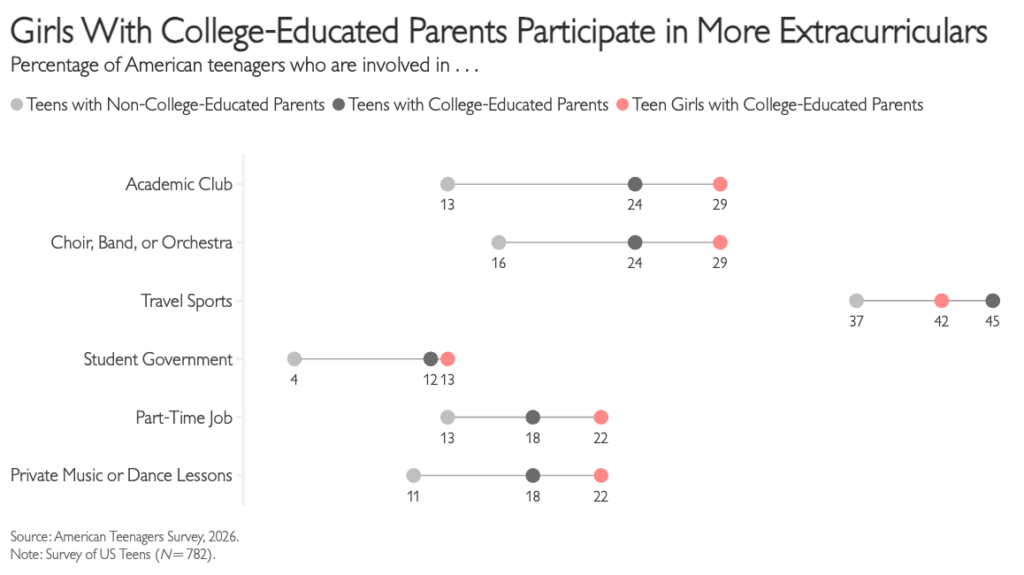
One thing that seems clear is that the decline of churches will likely make inequality worse. College-educated Americans are more active and involved in every sphere of American social and civic life, from book clubs and PTA meetings, to sports leagues and town halls. On average, they have more friends, broader social networks, and more extensive ties to the places where they live. If you want a fuller accounting of the abundant ways college graduates reap these social capital benefits, check out this recent report: “The College Connection: The Education Divide in American Social and Community Life.” Churches offer one way to bridge the gap, but fewer Americans are turning to them.
Tuesday, November 8, 2022
Family Dinner and Inequality
The family dinner was once a ubiquitous feature of American life, an experience shared across cultural, religious, and class lines, but it has disappeared in many households. Far fewer Americans report having regular meals with their family during their formative years. Baby Boomers were far more likely to have grown up having meals with their families than Millennials and Gen Zers. Only 38 percent of Gen Zers who are now adults report that their family ate together regularly growing up.
The disappearance of family dinner is not simply a function of generational changes in values and priorities. Increasingly, family dinners reflect the growing class divide in American society. In Our Kids: The American Dream in Crisis, Robert Putnam documents how the class divide in family dinners emerged during the 1990s and has expanded since. Today, college educated Americans are far more likely than those without a college education to have been raised in homes where family dinners were the norm. This wasn’t always the case.
Older Americans, regardless of educational background, report having eaten dinner as a family regularly during childhood. Nearly three-quarters (74 percent) of Americans age 50 or older without any college education report that they had family meals every day during childhood, roughly as many (79 percent) Americans that age with a post-graduate education who say the same.
For younger Americans, the story is entirely different. Among Americans under the age of 50, education now strongly predicts whether one had regular family meals growing up. Only 38 percent of younger Americans without a college education were raised in homes that shared meals every day. In contrast, more than six in ten (61 percent) younger Americans with a post-graduate education say their family ate together regularly.
Monday, September 5, 2022
Support for Unions
Gallup polls have been surveying Americans’ attitudes toward labor unions for nearly 90 years. Last week, the most recent Gallup survey found that union support was higher than it has been since the mid-1960s. Nearly three-quarters (71 percent) of respondents said they approved of labor unions.
Why?
Nearly three decades ago, a pair of researchers used statistical techniques to analyze decades of union approval polling. They wanted to find out why union support changed over time. Like previous research, they discovered that the state of the economy mattered. Specifically, Americans soured on unions when there was high unemployment — and were more supportive of unions when labor markets were tight.
The survey evidence suggests that this may still be true. Gallup surveys show a dramatic dip in union support between 2009 and 2012 — the last sustained period of high unemployment in the United States. Indeed, in 2009 support for organized labor fell below 50 percent for the first and only time in the Gallup series.
...
People are more likely to think unions are valuable when inequality seems high. Even in 2012, when overall support for organized labor was much lower than today, a strong majority agreed that “labor unions are necessary to protect the working person,” according to a Pew poll. People see unions as a counterweight to corporate power, fighting on behalf of average workers. Recent scholarship suggests local context matters: Rising economic inequality in one’s Zip code corresponds with greater support for labor unions. As the percentage of wealthy residents in one neighborhood climbs, so too does support for strengthening union
So why have unions gotten so much weaker?
Research points to the interrelated forces of automation, offshoring, and employer and political opposition as the key reasons the labor movement is weaker than it has been for a century. These underlying factors suggest rising popularity alone will not transform the fortunes of organized labor.
.png)